
Academic Editing and Paraphrasing While Preserving Meaning
Academic editing and paraphrasing for university research while preserving meaning, sources, originality, clarity, coherence, and proper scholarly attribution.

Academic Editing and Paraphrasing While Preserving Meaning
Academic editing and paraphrasing while preserving meaning and originality requires understanding the idea before changing its wording because proper academic paraphrasing does not mean replacing every word with a synonym or merely rearranging the sentence. The goal is to rebuild the expression in a clearer and more precise way while preserving the meaning of the source, the scientific terminology, and the required citation. A student may already have strong content, yet the writing can still contain repetition, overly long sentences, weak transitions, or several sources combined without a clear analytical voice. Academic editing helps separate ideas, strengthen connections, remove unnecessary wording, and make the writing more appropriate for academic theses while the researcher remains responsible for the ideas, sources, findings, and final version submitted to the university.
Academic Paraphrasing of Text
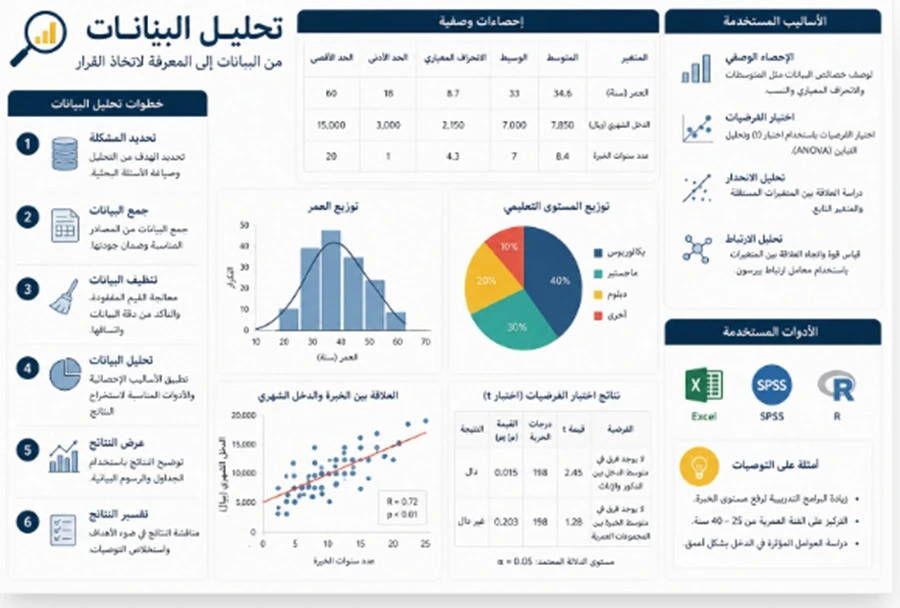
Academic paraphrasing of text depends on understanding the idea first and then expressing it through a new linguistic structure that preserves its scientific meaning. This is completely different from changing a few words while retaining the original sentence structure.
If a source states that a particular variable was associated with a higher level of a certain behavior within a specific sample, the paraphrase should not transform that association into a causal effect or generalize the finding to all populations. The linguistic change may appear small, but it can alter the scientific meaning substantially.
For this reason, paraphrasing begins by identifying the central meaning and the limitations contained in the original text. Who conducted the study? Which population was examined? What did the study find? How strong was the finding?
The sentence can then be reconstructed in a way that fits its function in the current research.
A sentence used in the previous-studies section, for example, may need a different formulation when the same idea is discussed in the discussion chapter because the purpose of the writing changes.
It is also essential to preserve the citation. If the idea comes from a source, it remains a borrowed idea even after the wording has changed. Paraphrasing therefore does not automatically transform the idea into the student’s original contribution and does not remove the need for attribution.
Originality in this context means that the researcher writes in their own academic voice, analyzes, connects, and selects what serves the argument instead of copying the verbal structure of the source, while still crediting the original author.
A common mistake is relying on tools that automatically rearrange words and produce sentences that may be grammatically acceptable but academically unnatural or technically inaccurate.
Specialized paraphrasing therefore examines the full context rather than treating each sentence as an isolated unit.
-
Paraphrasing should begin with understanding the meaning and purpose of the paragraph before selecting alternative words or rebuilding the sentence
-
Any idea derived from a source still requires appropriate citation even when it has been expressed through completely different wording
-
Specialized terminology should not be replaced with random synonyms because changing the term can alter the scientific concept itself
Academic Editing for Scientific Research
Academic editing for scientific research differs from ordinary proofreading because a proofreader may correct a grammatical error while an academic editor also asks whether the paragraph performs its intended function within the study.
A paragraph may be linguistically correct while containing three unrelated ideas.
Another sentence may combine a finding, supporting evidence, interpretation, and counterargument all at once, making it difficult to understand.
During editing, the central message of each paragraph is identified first.
An academic paragraph will often contain one main idea followed by explanation, evidence, comparison, or a logical transition to what follows. This is not a rigid template for every paragraph, but it is a useful standard for identifying overcrowded or poorly structured writing.
The level of language is also reviewed.
Some students assume that academic writing means using longer sentences and more difficult vocabulary. In reality, strong scientific writing is usually more precise and less open to misunderstanding.
Academic editing also reviews repetition across different parts of the research. A researcher may explain the same definition of a variable in the introduction, theoretical framework, and previous-studies section almost identically.
Instead of deleting repeated material randomly, the function of each occurrence should be identified. The introduction may present the concept briefly, the theoretical framework may explain it in depth, and the discussion may use it to interpret the findings.
It is also important not to turn editing into rewriting or authoring the research on behalf of the student.
The editor improves presentation and structure but should not invent findings, references, or research arguments that the researcher has not developed.
-
Academic editing reviews the function of the paragraph and its relationship with what comes before and after it rather than correcting language alone
-
Clarity and precision are more important than complicated wording because scientific writing should communicate ideas with the lowest possible level of ambiguity
-
Repetition should be handled according to the purpose of each section rather than deleted mechanically in a way that may weaken the scientific structure
Improving Scientific Paragraph Wording

Improving scientific paragraph wording begins by identifying the actual problem in the current paragraph because not every paragraph requires the same type of revision.
One paragraph may be too long and need division.
Another may be short but move abruptly between two ideas without a logical connection.
A third may contain five references without making the relationship among them clear.
If the problem is excessive length, the editor should identify the natural transition points between ideas rather than dividing the paragraph after an arbitrary number of lines.
If the problem is weak coherence, the relationship between the ideas should be clarified. Does the second idea extend the first, contradict it, provide an explanation, or offer an example?
Transition expressions should be used only when they reflect a genuine relationship. Phrases such as “in addition,” “in contrast,” or “on the other hand” cannot repair a paragraph if the ideas themselves are unrelated.
In paragraphs built from several sources, it is often stronger to organize the paragraph around the idea rather than around the names of individual authors.
For example, if three studies report a similar trend, the paragraph can present the trend first and then use those studies as supporting evidence instead of producing three separate mini-summaries.
This approach gives the researcher a stronger analytical presence.
The level of certainty should also be reviewed. Expressions such as “confirms” or “proves” are stronger than “suggests” or “is associated with,” and their use should match the strength of the available evidence.
-
Improving a paragraph begins by identifying its real weakness whether that is excessive length repetition weak coherence or an unclear central idea
-
Transitional expressions should represent genuine relationships among ideas rather than hide a logical break in the argument
-
Bringing several studies together around one idea helps create a coherent analytical paragraph instead of turning the chapter into a sequence of separate summaries
Academic Wording While Preserving Meaning
Successful academic wording while preserving meaning depends on understanding the difference between improving the expression and changing the information itself.
An editor may shorten a long sentence, rearrange its components, or clarify the reference of a pronoun, but should not alter the research finding or increase its strength simply because the new sentence sounds more impressive.
This point is especially important in statistical writing.
If a study states that “no statistically significant differences were found,” it should not be paraphrased absolutely as “there are no differences between the groups” because the two statements are not scientifically identical.
Likewise, if a source discusses a theoretical possibility, it should not be rewritten as though it were an established fact.
Preserving meaning also includes preserving conditions and limitations.
Sometimes a student shortens a sentence and removes the phrase “within the sample included in the study,” unintentionally transforming a limited conclusion into a broad generalization.
For this reason, the original text and its source may sometimes need to be reviewed together before a revised version can be approved.
This is especially important in academic theses because the revised sentence may later be used in the discussion or conclusion and become the basis for further interpretation.
-
Preserving meaning includes preserving the level of certainty limitations and context of the finding rather than only the broad general idea
-
Successful academic shortening reduces unnecessary words without removing a condition or limitation that changes the interpretation of the result
-
Every revised sentence should remain consistent with the evidence and source instead of sacrificing scientific accuracy for stronger-sounding language
Improving Academic Text Originality

Improving academic text originality means developing writing that reflects the researcher’s understanding and analysis instead of copying source structures or placing borrowed passages next to one another.
Originality does not mean that the researcher must invent a new fact in every sentence.
In the theoretical framework, for example, the researcher necessarily depends on previously published knowledge. Originality appears in selection, organization, comparison, interpretation, and the way existing knowledge is connected to the current research problem.
Originality is also not achieved by deleting a citation after paraphrasing a passage.
The opposite is true: an idea taken from a source continues to require attribution even after the wording has been completely reconstructed.
It is also very important to distinguish between improving academic writing and trying to manipulate similarity-detection systems.
The scholarly objective is not to obtain a lower similarity score by any means possible. The real goal is to make sure that direct quotation is limited and justified, borrowed ideas are properly cited, and the researcher’s own writing reflects genuine understanding.
If similarity appears because of a fixed scientific term, the official name of an instrument, or a formal title, the term should not be distorted merely to make the wording look different.
On the other hand, if entire paragraphs remain too close to a source in their structure, the better solution is to return to the idea, understand it properly, and rebuild the passage rather than making superficial word substitutions.
-
Academic originality comes from understanding analysis synthesis and the researcher’s voice rather than replacing words to make the text appear different
-
Citation remains necessary when another person’s idea is used even if the text has been completely paraphrased
-
Fixed scientific terminology should not be distorted merely to reduce similarity because scientific accuracy takes priority
Reviewing University Thesis Writing Style
Reviewing university thesis writing style focuses on creating a consistent way of writing across chapters so the reader feels they are reading one research project rather than several separate pieces written at different times.
This problem often develops after months of work.
The first chapter may be concise while the second contains very long sentences, and after supervisor revisions the third chapter may become much more direct than the others.
Stylistic review looks for balance.
Sentence and paragraph length, presentation of definitions, transitions between themes, and use of rhetorical or filler expressions are examined.
The researcher’s voice should also be reviewed.
Some parts of a thesis may consist almost entirely of consecutive source summaries without analysis, while other sections may contain extensive unsupported commentary.
The objective is to create balance between the sources and the researcher’s own analytical voice.
The researcher’s role should be particularly clear in the discussion chapter because this is where findings are compared with studies and theories and where interpretations are proposed within the limits of the evidence.
Terminology, headings, names of instruments, and variable names should also remain consistent.
The purpose of stylistic review is not to make every chapter sound identical because each chapter performs a different function, but to prevent stylistic differences from disrupting the reading experience.
-
Overall thesis style should be reviewed across chapters rather than on a page-by-page basis only
-
The researcher’s voice should be strengthened through analysis and connection rather than by removing sources or adding unsupported opinions
-
Differences among the introduction methodology results and discussion should be respected while maintaining a coherent writing identity throughout the thesis
Paraphrasing Research Sources

Paraphrasing research sources requires particular care because mistakes can move beyond writing quality and become issues of academic integrity.
The first rule is to read and understand the idea rather than work on one isolated sentence copied from the source.
After understanding the meaning, the researcher should move away from the original verbal structure as much as possible and express the idea according to the purpose of the current paragraph.
However, the citation should remain because ownership of the idea has not changed.
If the original source contains several ideas but the current research needs only one of them, the paraphrase should focus on the relevant point without attributing something to the source that it did not actually state.
With foreign-language sources, literal translation should not automatically be treated as paraphrasing.
Transferring the English sentence structure into Arabic while changing a few words can result in weak language and remain very close to the original construction.
A stronger approach is to understand the idea first and then express it through natural academic language.
When several sources are combined in one paragraph, it should also remain clear which claim is supported by which source.
Placing five references at the end of one long paragraph without being able to identify what each source supports weakens attribution and clarity.
-
A source should be paraphrased after understanding its idea rather than by substituting words inside the original sentence
-
Citation should remain attached to the borrowed idea even after paraphrasing
-
When several references are combined the reader should still be able to understand which parts of the argument are supported by which sources
Editing Scientific Text
Editing scientific text requires maintaining accuracy while making the writing easier to read.
Scientific writing may contain necessary technical terminology, but the sentence around that terminology does not also need to be unnecessarily complicated.
Sometimes the problem comes from excessive use of abstract nouns instead of direct verbs.
In other cases, the researcher uses passive voice in nearly every sentence, making the writing heavy without a clear reason.
There is no rule stating that all academic writing must use passive voice. The choice depends on the academic discipline, departmental style, and function of the sentence.
Sentences containing numbers should also be reviewed carefully.
Every figure should be clear: What does it represent? Which sample does it refer to? At which stage was it measured?
In the results chapter, description should remain separate from interpretation when the thesis structure treats them as separate sections.
In the discussion, wording should make it clear when the researcher is referring to the study’s own finding and when it is being compared with a previous source.
Editing also includes subheadings.
A strong academic heading should accurately describe the content beneath it and should not be broader or narrower than the section itself.
-
Scientific editing balances specialized language with clarity instead of treating complexity as evidence of academic quality
-
Figures and findings should be expressed in a way that makes their reference and context clear without changing their value or interpretation without evidence
-
The distinction between the researcher’s finding its interpretation and previous research should remain clear in the final edited text
Addressing Repetition in Academic Writing
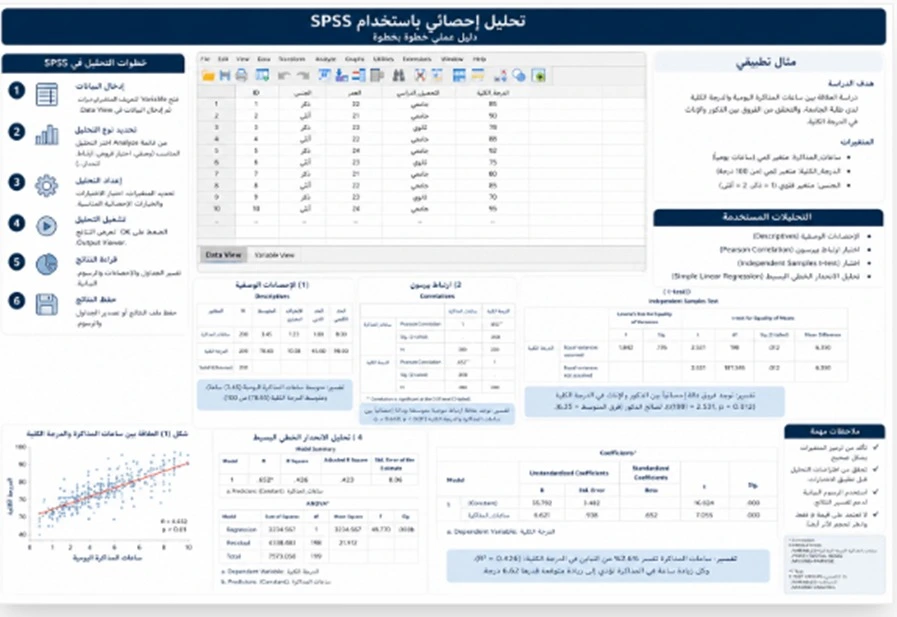
Addressing repetition in academic writing begins by identifying the type of repetition because not every repeated idea is a mistake.
Academic theses naturally contain concepts that must appear more than once.
The name of a variable, for example, will be repeated throughout the research.
The research problem may also need to be referenced in several chapters for different purposes.
Unhelpful repetition occurs when the same information is repeated without performing a new function.
A researcher may define a concept in detail in the introduction and then reproduce the same definition almost word for word in the theoretical framework.
A better approach is to keep the introduction concise and place the detailed explanation in its most appropriate section.
Repetition can also occur inside one paragraph, such as stating a finding and then repeating its meaning in the next sentence using different words.
This type of repetition can often be merged.
Another form appears in paragraph openings, such as using “studies indicate” ten times in a row. The wording can be varied while the core scientific terms remain consistent.
However, repetition should be removed carefully.
A sentence should not be deleted from the conclusion simply because the idea appeared in the results because the conclusion may need to restate the main finding in a shorter form to perform its own function.
-
Academic editing should distinguish between necessary functional repetition and repetition that adds no new meaning
-
Detailed information should be placed in the most appropriate section while shorter references can be used in other sections where needed
-
Removing repetition does not mean deleting every previously mentioned idea but reusing information according to the purpose of each chapter
Reviewing Research Wording
Reviewing research wording is the stage that brings all the previous levels together in one document: clarity of meaning, terminological accuracy, paragraph coherence, citation of ideas, and consistency of style.
At this stage, the text is read from the reader’s perspective rather than only from the writer’s perspective.
Does the reader understand the topic of the paragraph from the opening sentence?
Are the pronouns clear?
Does the evidence follow the appropriate claims?
Is the citation genuinely connected to the sentence it is supposed to support?
Are transitions between themes natural?
General expressions that sound academic but add little meaning should also be reviewed, such as “it is well known that” when the statement actually requires a source.
Conclusions should be checked to ensure they do not exceed the evidence.
At the same time, the researcher’s original language should be preserved as much as possible when it is already clear and correct.
The objective is not to make every thesis sound as if it were written by the same person, but to improve the writing so it meets academic standards while retaining the researcher’s own voice.
Any change that may affect the scientific meaning should be clearly identified for the student rather than treated as an ordinary language correction.
-
Final wording review should read the research as one connected argument rather than as a collection of separate sentences requiring correction
-
Every claim source and conclusion should be examined within context so the language does not become stronger than the evidence
-
Preserving the researcher’s voice is part of high-quality academic editing as long as the writing remains clear accurate and consistent with university requirements
What Is the Difference Between Paraphrasing, Academic Editing, and Proofreading?
These services overlap, but they are not the same:
A student may need only one service, while another project may require several levels depending on the condition of the research.
When Is Academic Paraphrasing Legitimate?
Academic paraphrasing is legitimate when the objective is to express a properly understood idea in the researcher’s own academic wording while preserving the source and citation and without distorting the content.
Taking a paragraph from a reference, changing some words, and presenting it as a personal idea without citation is not proper academic use.
Paraphrasing should also not be presented as a method for guaranteeing that a text will bypass a particular detection program or achieve a specific similarity percentage because originality assessment depends on the nature of the text, sources, and university policies rather than word replacement alone.
A stronger approach is for the student to focus on three principles:
-
Understand the source before writing
-
Express the idea in language that serves the research
-
Cite the source whenever the idea is derived from it
In this way, paraphrasing becomes a normal part of research writing instead of a superficial attempt to make the text look different.
Why Can Automated Paraphrasing Alone Harm Academic Research?
Tools that operate mainly at the word level may not understand the meaning of a term within a specialized discipline.
They may replace a technical term with an inappropriate synonym.
They may also change a causal relationship into an associative one, or the opposite.
In other cases, they produce sentences that appear grammatically correct but communicate a different meaning.
The writing may also become artificial because the tool attempts to change as many words as possible.
Technology can help with review or suggest alternatives, but the final text requires contextual human or academically informed reading.
This is particularly important in the results, discussion, and previous-studies sections because changing one word can alter the interpretation of the evidence.
Why Choose Rukn for Academic Editing and Paraphrasing?
Rukn Translation and Educational Services provides services related to research and project preparation, academic-content review, correction of research errors, and reference organization, so the required type of review can be determined according to the condition of the file.
A student may have a completed chapter that needs only stylistic academic editing.
Another may have paragraphs that remain too close to the wording of their sources and need to be rebuilt while preserving proper citation.
In another case, the research may need language proofreading and stronger connections among its sections.
The real value does not lie in changing the largest possible number of words.
The value lies in identifying the problem first and then selecting the appropriate type of revision.
The service should not invent sources, remove required citations, or change findings merely to make the text appear different.
Steps for Academic Editing and Paraphrasing
The work can be carried out through clear stages:
-
Receive the text and latest research version together with university instructions and supervisor comments where available.
-
Determine the level of intervention and whether the request involves paraphrasing academic editing proofreading or a combination of these services.
-
Understand the research topic and core terminology before modifying paragraphs.
-
Identify the passages that genuinely need rebuilding rather than changing the entire text without a clear reason.
-
Paraphrase while preserving meaning and without changing the strength of findings or claims.
-
Review citations and sources and ensure that paraphrasing has not removed the required attribution.
-
Improve connections between sentences and paragraphs and reduce abrupt transitions.
-
Address repetition and unnecessary wording while preserving necessary functional repetition.
-
Standardize terminology and style across the different parts of the research.
-
Review the final version in context to ensure that linguistic improvement has not changed the scientific meaning.
If the text relies heavily on particular sources, it is better to provide or clearly identify those sources so the accuracy of the meaning and attribution can be reviewed.
Academic Editing and Paraphrasing Prices
There is no single fixed price for every academic paraphrasing service because the amount of work depends on the condition of the material and the type of intervention required.
Factors that can affect the scope and cost include:
-
Number of words or pages
-
Current quality of the writing
-
Amount of restructuring required
-
Academic discipline
-
Density of scientific terminology
-
Number of sources used
-
Whether editing only or proofreading is also required
-
Presence of both Arabic and English text
-
Existing supervisor comments
-
Required delivery deadline
A text with correct language that needs stronger coherence is different from a chapter that requires most paragraphs to be rebuilt.
A source-based paragraph requiring accurate paraphrasing and citation review is also different from a paragraph written by the researcher that only needs stylistic improvement.
For this reason, it is better to send a representative sample or the current file so the actual level of work can be determined before pricing.
Frequently Asked Questions
Does paraphrasing mean changing the meaning of the text?
No. Proper academic paraphrasing changes the way the idea is expressed and the structure of the sentence while preserving the original meaning, accuracy, and essential terminology.
Can I remove the citation after paraphrasing the idea?
No, if the idea comes from a source. Changing the wording does not transfer ownership of the idea to the researcher, so citation remains necessary.
Does paraphrasing guarantee a specific similarity percentage?
No specific percentage should be guaranteed because the result depends on university systems, the nature of the text, terminology, references, and the method used to calculate similarity. The better objective is accurate, original, and properly cited academic writing.
What is the difference between paraphrasing and academic editing?
Paraphrasing focuses on expressing an idea through a new linguistic structure, while academic editing is broader and includes paragraph organization, coherence, accuracy, style, repetition, and consistency.
What should I send when requesting the service?
Send the latest version of the text or research, the sources related to important passages where available, university instructions, supervisor comments, and specify whether you need paraphrasing, academic editing, or comprehensive proofreading.
Conclusion
Successful academic editing and paraphrasing while preserving meaning and originality is not measured by the number of words that have been replaced or only by how different the sentence appears from the source.
The real value appears when the text becomes clearer and more coherent while remaining faithful to the idea, source, and evidence.
Proper paraphrasing preserves meaning.
Academic editing improves the construction of the argument.
Proofreading removes language errors.
Citation protects the intellectual ownership of the original idea.
When these elements work together, the research develops a more mature academic voice without sacrificing scholarly integrity.
If you already have a research chapter, university thesis, previous-studies section, or academic text that needs improvement, prepare the current version, the related sources, and any supervisor comments, then contact Rukn Translation and Educational Services to determine whether you need paraphrasing, academic editing, style review, or repetition reduction before university submission.
Need Help?
Contact us directly via WhatsApp and we will reply as soon as possible.
More Articles
University Case Study Review with Analysis and References
University case study review with problem analysis, evidence organization, theory application, references, recommendations, and final academic checking before submission.
Read Article → Thesis PreparationResearch Survey Design and Review Before Validation and Distribution
Research survey design and review before validation and distribution, including dimensions, items, response options, research objectives, pilot testing, and university requirements.
Read Article → Scientific Research WritingAPA 7 Reference Formatting for Arabic and English Sources
APA 7 reference formatting for Arabic and English academic sources, including in-text citations, reference lists, DOI links, quotations, and Saudi university requirements.
Read Article →