
Research Survey Design and Review Before Validation and Distribution
Research survey design and review before validation and distribution, including dimensions, items, response options, research objectives, pilot testing, and university requirements.
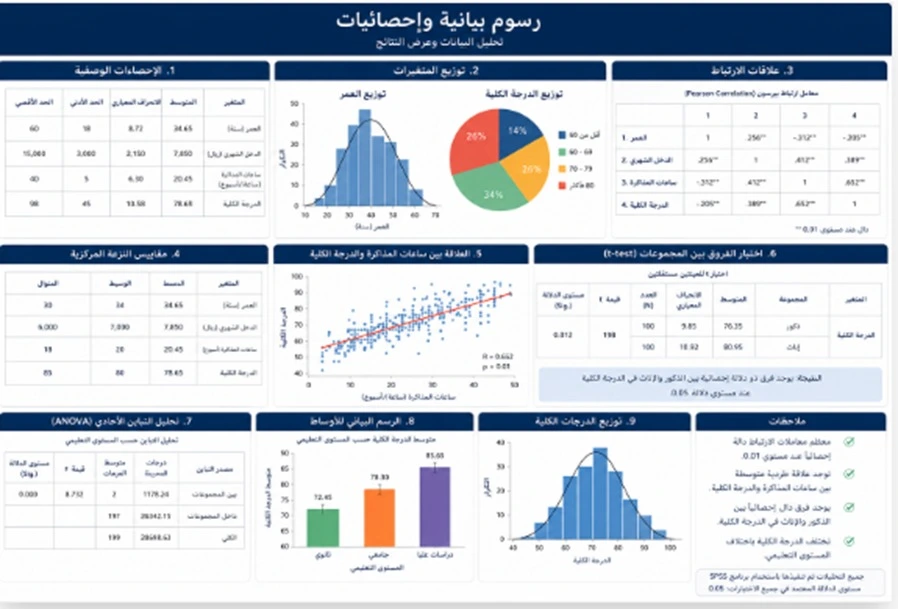
Research Survey Design and Review Before Validation and Distribution
Research survey design and review before validation and distribution requires much more than writing a group of questions and placing them in an online form. The instrument must be directly connected to the study objectives, variables, target sample, and the type of analysis that will later be performed. An unclear, double-barreled, or leading question can produce data that are difficult to interpret no matter how large the sample becomes. For this reason, a strong review begins with the research plan itself, then converts concepts into dimensions and measurable items, examines language clarity, response options, and question order, and finally prepares a suitable version for expert review and pilot testing before actual distribution according to university requirements, supervisor guidance, and applicable research-ethics procedures.
Designing a Scientific Research Survey
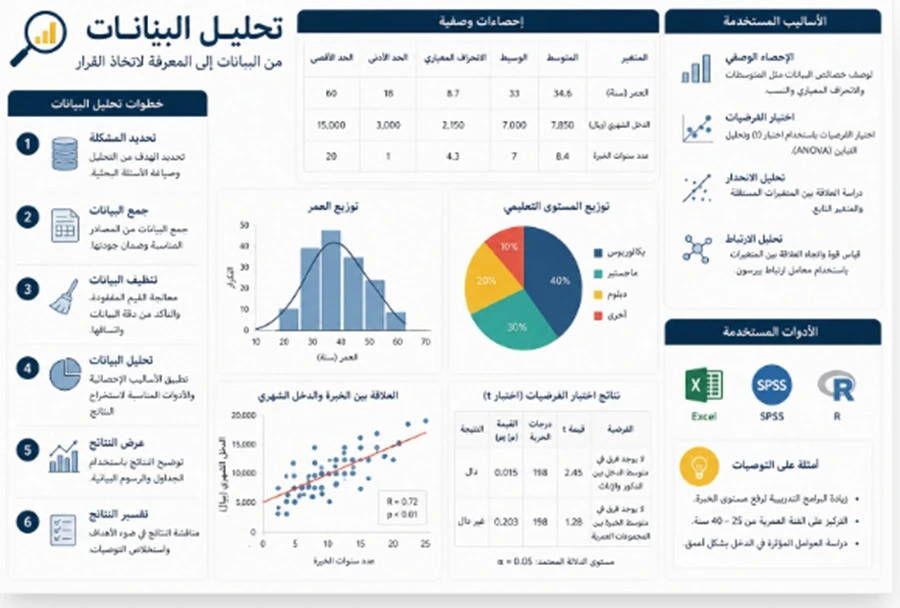
Designing a scientific research survey begins before the first question is written because the most important step is determining exactly what information the researcher needs to collect in order to answer the research questions.
If the research aims to understand students’ attitudes toward a particular service, the instrument needs items that measure those attitudes in a way that is consistent with how the variable is defined in the study.
If the goal is instead to measure participants’ knowledge of a specific concept, the instrument may need a completely different structure from a questionnaire designed to measure satisfaction, attitudes, or perceived behavior.
For this reason, a student should not begin by downloading a ready-made questionnaire from the internet and then adjusting the research topic to fit the instrument.
The instrument should serve the research question, not the other way around.
The next step is converting variables and concepts into dimensions or domains.
If a variable consists theoretically of three dimensions, it should be clear how each dimension will be represented in the instrument.
However, the number of dimensions should not be determined by a desire to make the questionnaire appear more comprehensive.
Every dimension should have a clear foundation in the theoretical framework, previous studies, or the operational definition adopted in the research.
The target population should also be identified carefully.
A question suitable for faculty members may not be suitable for first-year university students.
Likewise, a questionnaire directed at specialists may use language that would be inappropriate for a general audience.
The researcher then needs to decide on the response format.
Does the study require a Likert scale? Multiple-choice responses? Frequency questions? Binary responses? Open-ended answers?
The choice should be driven by the type of information needed for the planned analysis.
-
Instrument design should begin with research questions variables and operational definitions rather than with a ready-made questionnaire template
-
Every dimension should have a clear scientific justification and be connected to a concept or construct that genuinely needs to be measured
-
Response formats should be selected according to the nature of the variable and expected analysis rather than simply choosing the most common questionnaire format
Reviewing a Survey Before Distribution
Reviewing a survey before distribution is one of the most important stages because an error discovered after hundreds of responses have been collected is much harder to correct.
Before distribution, the researcher should read the instrument as if they were a participant seeing it for the first time.
Are the instructions clear?
Does the participant understand what is expected?
Is there a question that requires information the respondent may not reasonably know?
Does the question assume something that may not apply to everyone?
For example, a question such as “How many times per week do you use the service?” without an option such as “I do not use the service” assumes that every respondent is already a user.
The questionnaire length should also be reviewed.
A longer instrument is not automatically a stronger one.
If it contains dozens of highly similar items, participants may become fatigued and start answering quickly without sufficient attention.
At the same time, excessive shortening may leave an important dimension represented by only one or two items without a clear methodological justification.
Question order should also be examined.
Beginning with difficult or sensitive questions may reduce the participant’s willingness to continue.
Random movement between unrelated dimensions can also increase cognitive effort and weaken the response experience.
If the survey is electronic, the technical version should be tested as well.
Do all response options work correctly?
Are the required questions genuinely necessary?
Does the branching or skip logic function properly?
Can the participant complete the form without being sent through an inappropriate path?
-
Pre-distribution review identifies hidden assumptions missing options and technical problems before they become difficult-to-correct data problems
-
Questionnaire length should be determined by scientific need rather than the belief that more items automatically create a stronger instrument
-
Testing the survey from the participant’s perspective helps identify problems with wording order required fields and navigation paths
Writing Survey Questions

Writing survey questions requires direct language that participants understand in the same way the researcher intends.
One of the most common problems is the double-barreled question.
For example: “How satisfied are you with the speed and quality of the service?”
A participant may be satisfied with the speed but dissatisfied with the quality, yet the question forces one answer.
If the researcher needs to measure both issues, the better approach is to separate them.
Leading questions should also be avoided.
A statement such as “To what extent do you agree that the excellent new system improved your experience?” includes a positive judgment inside the question itself.
A more neutral formulation avoids suggesting the answer the researcher expects.
Ambiguous terminology also needs attention.
Words such as “always,” “often,” or “to a large extent” may be interpreted differently by respondents unless the response scale itself defines the categories clearly.
For behavioral questions, defining a time frame may improve accuracy.
Instead of asking, “Do you use the library frequently?” the researcher may ask about the number of visits within a specified period if that information serves the research purpose.
Double negatives should also be avoided because participants may become confused about what it means to agree with a sentence that already contains multiple negatives.
Sensitive items should use respectful and non-accusatory language and collect only information that is genuinely necessary for the study.
-
Each question should ideally measure one idea rather than combine several variables in one statement
-
Neutral wording reduces the risk of guiding participants toward an answer they believe the researcher prefers
-
Specifying time or context when necessary can produce more accurate responses than using broad terms that allow several interpretations
Preparing the Research Study Instrument
Preparing the research study instrument involves more than the questionnaire items themselves.
A complete instrument may include an introduction for participants, instructions, response guidance, thematic sections, demographic questions, and any required consent information depending on the study and institutional requirements.
However, not every study requires exactly the same elements in the same form.
The introductory section should explain the purpose of data collection at an appropriate level without influencing how participants answer.
For studies subject to particular ethical requirements, there may also be a specific consent format or information that participants need to see before starting.
The dimensions should then be arranged logically.
The first section does not always have to contain demographic information.
In some cases, it may be better to begin with questions directly related to the topic and place demographic information later according to the response experience and research design.
Every question should also be justified.
If age will not be used in sample description, analysis, interpretation, or any other legitimate research purpose, the researcher should ask why it is being collected at all.
This is also relevant to participant privacy and the principle of minimizing unnecessary data.
When an instrument is adapted or translated from an existing scale, the student should also identify its use conditions, permissions, and any requirements for translation or cultural adaptation.
A published scale should not automatically be assumed to be freely modifiable.
-
Instrument preparation includes the introduction instructions dimensions response options and required participant information rather than only the question items
-
Personal information should be collected only to the extent justified by the research instead of adding routine demographic questions without a clear purpose
-
Existing scales require checking their source usage conditions and adaptation requirements before modification or translation
Writing Scale Items
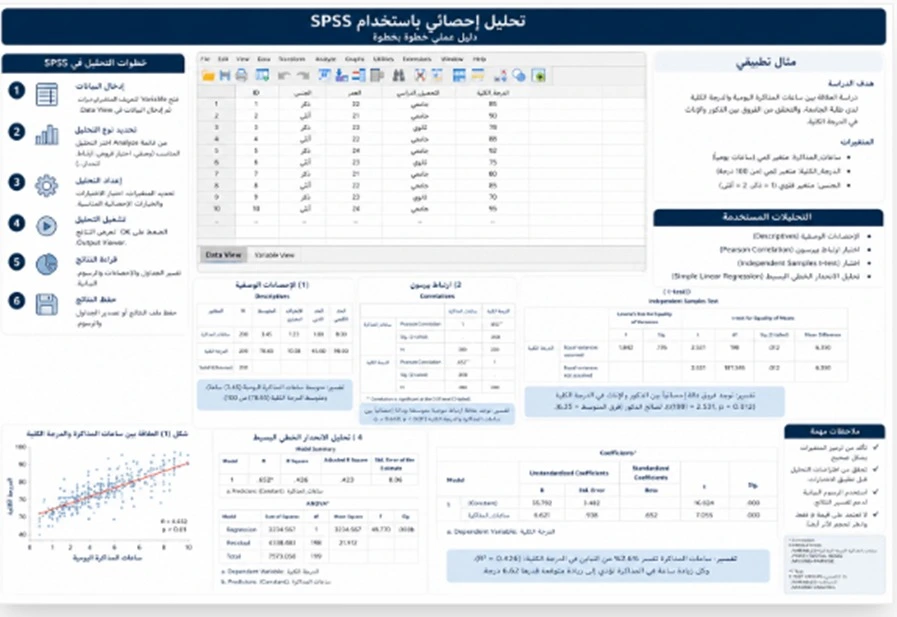
Writing scale items is different from writing a direct factual question because a scale often represents a theoretical construct or dimension through a set of related items.
Each item should therefore be connected to the dimension it is intended to represent.
If a dimension is called “ease of use,” for example, an item about price should not be included unless the theoretical definition of that dimension actually includes cost.
Items should also be reasonably consistent in their level of abstraction.
Some statements may be extremely general, such as “The service is excellent,” while others may be highly specific, such as “I can complete the request in less than three minutes.”
Combining such items within one scale needs justification because they may represent different levels of the construct.
When positive and negative items are used, that decision should also be intentional.
Reverse-worded items may sometimes help address certain response patterns, but they can also confuse participants, especially when the wording is complicated.
They should therefore not be included automatically simply because older scales often use them.
The number and structure of response options also require consistency.
One part of a dimension should not use a five-point scale while another uses a seven-point scale without a clear reason.
The researcher should also make sure the response options cover the realistic range of possible answers and appear in an understandable order.
-
Every item should represent the theoretical dimension under which it appears rather than merely being generally related to the topic
-
Negative or reverse-worded items should be used only when justified and written clearly enough to avoid unnecessary participant confusion
-
Response scales need consistency and clear logic so participants understand what each option means across the instrument
Designing a University Questionnaire
Designing a university questionnaire requires consideration of both the research objective and the academic program requirements rather than simply creating a visually attractive form.
In some cases, a student needs the questionnaire for a course project.
In other cases, it may be part of a master’s thesis or doctoral dissertation and may need to go through proposal approval, expert review, or ethical procedures before distribution.
For this reason, the researcher’s current stage matters.
If the instrument is still part of the proposal stage, substantial revisions may still be relatively easy.
If it has already received formal approval in a specific form, later changes may need to be discussed with the supervisor or relevant institutional body depending on applicable rules.
The language of a university questionnaire should also match the study population.
If participants come from several academic disciplines, highly specialized terminology from only one discipline may create differences in understanding.
If the instrument is bilingual, the two versions should be equivalent in meaning rather than merely literal translations of each other.
Electronic design should also consider mobile use because many participants may open the form on a small screen.
Large tables or extremely long instructions can make mobile completion difficult.
However, visual design should never come before scientific quality.
A visually polished questionnaire with weak questions remains a weak research instrument.
-
University questionnaire design should consider the research stage and supervisor or committee requirements before making major changes to an approved version
-
Language should match the participants’ level so respondents are not required to understand unnecessary specialist terminology
-
Mobile usability is important for electronic forms but cannot compensate for weak dimensions or poor item wording
Scientifically Reviewing Survey Questions

Scientifically reviewing survey questions requires testing every item against the research question or theoretical dimension it is supposed to measure.
The researcher should ask: Why is this item included?
What information will it provide?
How will its response be used in analysis?
If there is no clear answer, the item may be unnecessary.
Coverage should also be reviewed.
A dimension may be called “quality of the educational experience,” while all five items focus only on system accessibility and ignore other components included in the researcher’s own definition.
That is not merely a language problem; it is a problem in construct representation.
This is where expert review can become important when appropriate and required by the study.
Experts may assess item relevance, clarity, and whether the instrument adequately covers the construct.
However, sending a questionnaire to an expert does not mean every suggestion should be applied literally without analysis.
If one expert recommends deleting an item while another recommends retaining it, the researcher should return to the theoretical definition and research objective and make the decision with the supervisor.
After revision, a pilot study may also be appropriate to examine how participants understand the items and how the instrument performs before final administration, depending on the study design.
-
Scientific review connects every item to its variable dimension and research question rather than judging wording independently from the research plan
-
Expert review can help evaluate relevance clarity and coverage but final decisions still require understanding the reasons behind expert comments
-
Pilot testing may reveal problems that are difficult to identify through theoretical reading alone such as misunderstood items or unsuitable response options
Arranging Questionnaire Dimensions
Arranging questionnaire dimensions can affect both the participant experience and the way questions are interpreted.
Dimensions should not be placed randomly according to the order in which they were written.
A logical sequence is usually preferable.
The questionnaire may begin with relatively easy questions directly connected to the topic so participants can enter the context naturally.
The sections can then move from broader issues to more specific ones.
Sensitive or personal questions may need a different position depending on the nature of the study.
Within each dimension, related items should generally be grouped together rather than forcing the participant to move back and forth between unrelated concepts.
However, some measurement instruments may have methodological reasons for using a different item order, so one rigid rule should not be applied to every scale.
The researcher should also consider whether an earlier question can influence the answer to a later one.
If participants are first asked in detail about one particular service problem and are then asked to evaluate the service overall, the earlier question may make that problem unusually salient.
This means question-order effects should be considered.
Demographic questions also need review.
If they are numerous or sensitive, placing them at the beginning may increase dropout before participants reach the main research questions.
-
Questionnaire dimensions should be arranged in a way that reduces cognitive effort and makes transitions between topics understandable
-
Question order should be reviewed for possible influence of earlier questions on the interpretation of later ones
-
Demographic items should be placed where they best serve the study rather than assuming they must always appear first
Developing a Data Collection Instrument

Developing a data collection instrument means moving from an initial draft to an instrument that has been reviewed and refined on the basis of evidence and clearly documented decisions.
Development does not mean adding new questions after every comment.
Sometimes improvement requires deletion.
If two items measure almost the same idea using nearly identical wording, retaining both may not add value unless there is a clear measurement justification.
In other cases, the researcher may need to reconsider the definition of the dimension itself.
If experts repeatedly disagree about where items belong, the deeper problem may be that the dimensions are not sufficiently distinct.
When the researcher develops a new scale, the development process should be documented.
Where did the dimensions come from?
How were the items written?
Who reviewed them?
What revisions were made?
How were the instrument properties evaluated according to the research design?
Validity and reliability should not be treated as a single phrase automatically added to the methodology section.
The appropriate evidence depends on the type of instrument and how its scores will be used.
A coefficient such as Cronbach’s alpha may be appropriate for examining one aspect of internal consistency in some multi-item scales, but it is not the only evidence needed for the quality of every type of instrument.
An extremely high value also does not automatically mean the scale is excellent because it may sometimes indicate excessive redundancy among items.
-
Instrument development is a documented process that begins with a theoretical foundation and proceeds through review revision and appropriate testing according to the study
-
Validity and reliability can be evaluated in several ways and one test should not be applied mechanically to every questionnaire
-
Removing or merging items can be part of instrument development just as much as adding items when redundancy or confusion is present
Preparing the Survey for Expert Review
Preparing the survey for expert review means presenting the instrument in a way that helps reviewers provide useful feedback rather than sending a list of questions with no research context.
Experts need to know the study title or topic, objectives, definitions of the variables, and the dimensions to which the items are intended to belong.
It is also useful for the review form to request specific judgments.
Is the item relevant to the dimension?
Is the wording clear?
Should it be deleted or revised?
Are any important items missing?
If the researcher simply asks, “What do you think of the questionnaire?” the feedback may remain too general to support clear decisions.
After expert comments are received, they should be organized systematically.
The objective is not to make the greatest possible number of changes.
The objective is to identify where reviewers clearly agree that a problem exists and where differing opinions require a scientific decision.
A copy of the instrument before and after expert review should also be preserved so the researcher can document the modifications if needed in the thesis or when discussing them with the supervisor.
If the university or ethics committee requires a particular version of the instrument, the researcher should make sure the correct version is the one submitted and later distributed.
Changes made after formal approval may require an additional procedure depending on institutional rules, so students should verify this before distributing a different version.
-
An expert-review form should provide enough information about the study and dimensions for reviewers to evaluate each item in its proper context
-
Expert comments should be classified and analyzed rather than implemented mechanically without reference to the instrument’s scientific foundation
-
Preserving versions before and after expert review helps document development and reduces the risk of distributing the wrong or unapproved version
What Is the Difference Between a Questionnaire, Survey, and Scale?
These terms are sometimes used interchangeably in everyday discussion, but they may have different functions in research depending on the discipline.
The terminology used in the thesis should remain consistent with the research discipline and the methodological definition of the instrument rather than changing terms throughout the document without justification.
Common Errors That Weaken a Survey Before Expert Review
Sometimes the problem is not the number of questions but the way they were constructed.
Important weaknesses include:
-
One question measuring two ideas at the same time
-
A statement that leads participants toward a preferred answer
-
Vague or unnecessarily technical terminology
-
Response options that fail to cover realistic cases
-
A dimension containing items that do not fit its definition
-
Repeating the same idea through nearly identical statements
-
Demographic questions with no planned analytical use
-
Changing the meaning of response-scale endpoints between dimensions
-
Using different names for the same variables in the proposal and questionnaire
-
Building the instrument without considering the analysis that will later be performed
Identifying these issues before expert review allows reviewers to focus more on scientific quality rather than spending most of their effort correcting basic design problems.
Does Every Questionnaire Need Pilot Testing?
That depends on the research design, the nature of the instrument, and the requirements of the university and supervisor.
Pilot testing can help determine whether participants understand the items as intended, whether the instrument length is reasonable, and whether the response options function appropriately.
It may also provide data for certain statistical checks when those checks are suitable for the methodology.
However, it is not appropriate to claim that every questionnaire requires the same pilot sample size or the same validity and reliability procedures.
A knowledge test based on correct and incorrect answers is different from a multi-item attitude scale, and each has different methodological considerations.
The decision should therefore be based on the research design, instrument type, and appropriate methodological or university guidance.
Validity and Reliability: What Should the Student Know?
In simple terms, validity concerns whether the available evidence supports interpreting the scores or using the instrument for the intended purpose.
Reliability concerns the consistency of measurement according to the form of reliability appropriate for the instrument.
However, the topic is broader than saying, “The instrument was reviewed by experts and Cronbach’s alpha was calculated.”
Depending on the study, instrument evaluation may include:
-
Expert review of item content
-
Examination of the relationship between items and their dimensions
-
Pilot testing with a group similar to the target population
-
Internal-consistency analysis where appropriate
-
Examination of scale structure in studies that require it
-
Other forms of validity or reliability evidence depending on the research design
Every procedure should have a methodological justification rather than being included simply because it appears frequently in previous theses.
Ethical Considerations Before Distributing a Survey
Before distributing the questionnaire to actual participants, the researcher should understand the ethical requirements of the university and the particular study.
At some Saudi universities, the research instrument itself may form part of the documents submitted for ethical review, and there may also be specific requirements for informed consent or data collection depending on the research design and participant group.
Some studies may additionally require permission from another organization to access students, employees, or institutional data.
For this reason, it is not enough for the supervisor to say that the questions are good and then immediately publish the survey link.
The student should confirm:
-
Does the study require ethical approval?
-
Is a formal data-collection letter required?
-
Do participants need an information sheet or consent form?
-
Are personally identifiable data genuinely necessary?
-
Where will the data be stored and who will have access to them?
-
Do the participants belong to a group requiring additional safeguards?
The answer differs from one institution and study to another, so the final authority is the university or ethical body responsible for the research.
Why Choose Rukn for Survey Review?
At Rukn Translation and Educational Services, educational services are available in areas related to research, statistical analysis, and academic-document preparation, allowing the scope of support to be defined according to the current stage of the instrument.
A student may have an initial questionnaire and need the dimensions and wording reviewed.
Another student may have completed expert review and need help organizing comments and preparing the revised version.
In another case, the instrument may already be finalized and the student may need help preparing the data file or planning the analysis after data collection.
The main value is that the work begins with the study objectives rather than treating the questionnaire as an isolated list of questions.
At the same time, responsible academic support should not guarantee that reviewers will accept every item or that a university committee will approve the instrument because these remain academic decisions dependent on the proposal, discipline, and responsible institution.
It would also be inappropriate to invent expert-review results, reliability coefficients, or pilot data that were never actually collected.
Steps for Designing and Reviewing a Research Survey
The work can be organized practically through the following stages:
-
Receive the research title proposal and research questions to understand the purpose of the instrument.
-
Identify variables and operational definitions together with the dimensions that need to be measured.
-
Build the initial dimensions and connect each one to a research objective or question.
-
Write the items using clear neutral language appropriate for the target population.
-
Select the response format that best fits each part of the instrument.
-
Review repetition overlap double-barreled items and leading wording.
-
Prepare the expert-review version with study information and a structured feedback form.
-
Analyze expert comments and implement revisions that have a clear scientific justification.
-
Conduct the required pilot testing or methodological checks according to the research design and university requirements.
-
Prepare the final version for distribution after confirming necessary approvals and technical accuracy of the form.
Following this sequence helps ensure that every change to the questionnaire has a clear research-based reason rather than adding or removing questions randomly.
Research Survey Design and Review Prices
There is no single fixed price for scientific research survey design because the amount of work depends on the starting point and nature of the instrument.
Factors that can affect the service scope include:
-
Whether the instrument is built from the beginning or an existing version already exists
-
Number of variables and dimensions
-
Number of items
-
Academic discipline
-
Whether an existing scale is being adapted
-
Need for Arabic and English versions
-
Level of scientific review required
-
Presence of supervisor or expert comments
-
Need to organize an expert-review form
-
Whether pilot testing or later data analysis is included
-
Type of electronic survey platform
-
Required delivery deadline
A completed questionnaire requiring wording review is different from an instrument that needs to be developed from the research objectives and theoretical framework.
Likewise, a specialized multidimensional scale is different from a simple information questionnaire.
For this reason, it is better to provide the proposal or at least the research title, objectives, questions, and current instrument version so the actual scope can be identified before pricing.
Frequently Asked Questions
Can a questionnaire be designed before the research proposal is complete?
It is better for the research problem, objectives, questions, and variables to be clear first because the instrument is designed to serve those elements. Starting too early may lead to major reconstruction later.
Does every questionnaire need expert review?
That depends on the nature of the instrument, research design, university requirements, and supervisor guidance. Researcher-developed instruments are often reviewed by specialists, but the required process should be determined according to the study.
How many questionnaire items are appropriate?
There is no single number suitable for every study. The appropriate number depends on the number of dimensions, nature of the variable, expected completion time, and scientific need for each item.
Is Cronbach’s alpha enough to prove questionnaire quality?
It should not be treated as comprehensive evidence of quality for every instrument. It is one indicator of internal consistency when appropriate, while other forms of validity and reliability evidence may also be required depending on the instrument and research design.
What should I send when requesting questionnaire review?
Send the research title, problem, objectives, research questions or hypotheses, variable definitions, current questionnaire version, supervisor comments, and any university or expert-review requirements that are available.
Conclusion
Successful research survey design and review before validation and distribution is not measured by the number of items or the appearance of the electronic form.
A strong instrument begins with a clear research question.
The variables and dimensions are then identified.
Those dimensions are converted into items that participants can understand in the intended way.
Review, expert validation, pilot testing, and required ethical procedures then follow according to the nature of the research.
If the question itself is weak, a larger sample will not fix it.
If the response options are incomplete, advanced statistical analysis cannot compensate for the missing information.
The real investment is therefore in instrument quality before distribution because every result the researcher later interprets begins with the wording of each item inside the questionnaire.
If you already have an initial questionnaire, supervisor comments, or an instrument that needs to be prepared for expert review, organize the research title, questions, variables, and current version, then contact Rukn Translation and Educational Services to determine whether you need instrument development, review of dimensions and items, preparation of an expert-review version, or final organization before field distribution.
Need Help?
Contact us directly via WhatsApp and we will reply as soon as possible.
More Articles
University Case Study Review with Analysis and References
University case study review with problem analysis, evidence organization, theory application, references, recommendations, and final academic checking before submission.
Read Article → Scientific Research WritingAPA 7 Reference Formatting for Arabic and English Sources
APA 7 reference formatting for Arabic and English academic sources, including in-text citations, reference lists, DOI links, quotations, and Saudi university requirements.
Read Article → Academic StudiesAcademic Editing and Paraphrasing While Preserving Meaning
Academic editing and paraphrasing for university research while preserving meaning, sources, originality, clarity, coherence, and proper scholarly attribution.
Read Article →