
Professional Master's Defense Presentation Design in Saudi Arabia
Professional master's thesis defense PowerPoint design in Saudi Arabia, with structure for the problem, methodology, results, and academic presentation.

A professional PowerPoint presentation for a master's thesis defense in Saudi Arabia requires understanding the thesis first and then rebuilding it as a concise research story that guides the defense committee from the research problem to the methodology, findings, and academic contribution without turning the slides into a shortened copy of the thesis chapters. A successful presentation is not measured by the number of visual effects or slides but by how clearly it explains the logic of the study and highlights the researcher’s most important decisions and findings within the available time. Saudi universities can differ in their defense procedures, forms, and detailed requirements from one university and department to another, so the researcher should confirm the program instructions and allocated presentation time before finalizing the deck. Some universities publish separate forms for thesis readiness, defense committee formation, and committee reports, which shows that the presentation should support a formal academic assessment rather than function as a visually attractive presentation only.
Master's Defense PowerPoint Design
Master's defense PowerPoint design should begin with the thesis itself rather than with selecting a ready-made template. The first step is reviewing the abstract, research problem, questions, objectives, methodology, findings, and conclusion and then identifying the central line connecting them. A researcher who starts with a thirty-slide template often ends up trying to fill every placeholder with any available content, while the stronger approach is the opposite: determine what the committee genuinely needs to understand and then build the number of slides around that need.
A useful defense presentation usually moves through a clear sequence beginning with the study title and a concise introduction to the problem, followed by its importance, the gap the study attempted to address, research questions or hypotheses, methodology, sample or participants, research instrument, analysis procedures, major findings, discussion, and key recommendations. Not every heading in the thesis needs to become a separate slide because a defense presentation is not a visual table of contents for the thesis.
From the practical perspective of an academic defense, committee members have generally already read the thesis or have access to it. The purpose of the presentation is not to read the thesis back to them. The purpose is to demonstrate that the researcher understands the study and can explain why a particular method was chosen, how the findings were reached, and what those findings actually mean.
In Saudi universities, formal defense committees are formed after the thesis satisfies the required readiness and approval procedures according to each institution's applicable regulations and implementing rules. Universities also use forms for committee reporting and thesis readiness. This shows that the presentation is part of a serious academic assessment and should be fully consistent with the final version of the thesis.
One of the most common problems in master's defense presentations is placing a paragraph of seven lines on a slide and then reading it word for word. A committee member can usually read faster than the presenter and may focus on the screen instead of the researcher. A better slide presents the main idea and essential evidence while the researcher provides the explanation verbally.
-
Every slide should answer a clear question such as what the problem is how the data were collected or what the main finding was instead of merely providing space to copy a paragraph from the thesis
-
The number of slides should be decided only after confirming the time allocated by the department or supervisor because a twenty-minute presentation cannot be designed with the same density as a shorter or longer defense
-
The final presentation should be checked against the final thesis version so figures terminology and findings that were revised in the thesis do not remain outdated in the PowerPoint
Master's Defense Presentation in Saudi Arabia
A master's defense presentation in Saudi Arabia should respect the specific nature of the defense process at the researcher’s university because procedures are not identical across all universities or even across every graduate program within the same institution. Some universities publish separate forms for scheduling the defense, forming the committee, confirming thesis readiness, and submitting post-defense reports, while other universities apply different implementing procedures according to their graduate-study regulations. A presentation template used by a student at another university should therefore not automatically be treated as suitable for every program.
Before design begins, the practical first step is to ask the supervisor or department about the presentation duration, required university logo, title-slide format, and whether there are mandatory sections or an official template. If the researcher only has ten minutes, spending three slides on a long theoretical introduction and then rushing through the results would be a poor use of time.
In the Saudi academic context, visual identity should usually remain calm and respectful of the university’s identity without excessive use of colors. The university logo is not a decorative element that needs to dominate every slide. Unless an official template requires otherwise, it can usually appear in a balanced way with the college and department information at the beginning.
Language direction also matters. If the presentation is in Arabic, headings, tables, and visual flow should be consistently right-to-left. If the research includes English terminology, instruments, or names, those can be used where needed, but the deck should not randomly alternate between directions in a way that makes the slides difficult to follow.
Where the committee includes members from slightly different subfields, specialist terminology should be explained briefly instead of assuming every committee member uses exactly the same terminology as the researcher.
It is also wise to prepare a stable backup version of the presentation that preserves fonts and formatting if a different computer is used on the day of the defense. The objective is not to overcomplicate the technical preparation but to prevent a simple formatting problem from distracting the researcher during an important academic event.
-
Department and supervisor instructions should take priority over general presentation advice because Saudi universities differ in their forms procedures presentation timing and defense organization
-
Academic visual identity should remain calm and coordinated with the university rather than using promotional effects that pull attention away from the study itself
-
Testing the presentation on a different display before the defense can reveal font table and text-size problems that are not always visible on the researcher’s own laptop
Master's Thesis Slide Design
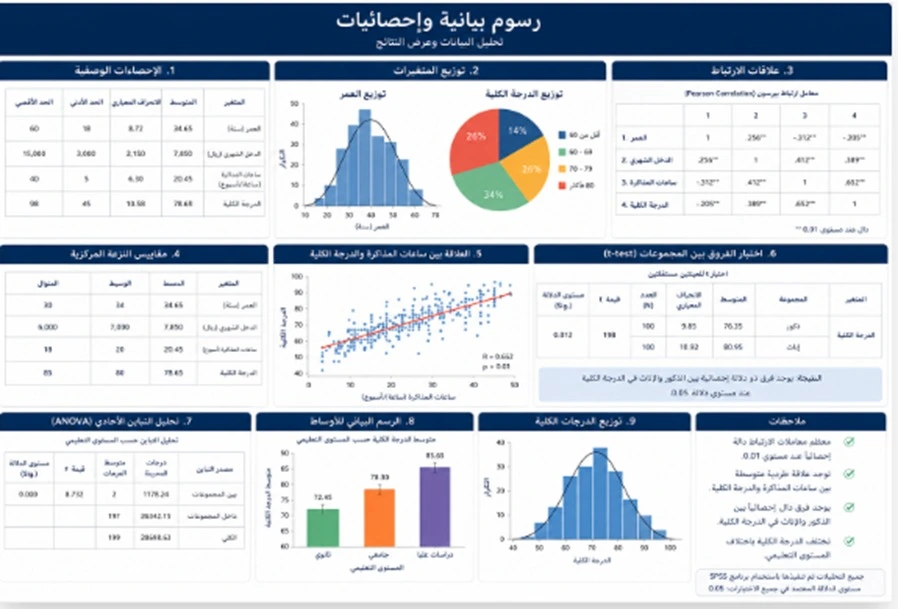
Master's thesis slide design requires converting content from a long written format into a selective visual format. A thesis is written to document details comprehensively, while a presentation slide is designed to help the researcher explain one important idea within limited time. These are two different functions.
The introduction should therefore be compressed intelligently. Five slides describing the historical background of the topic are rarely necessary when one or two slides can establish the context and lead directly to the research problem. Instead of copying long definitions, the presentation can use one relevant fact, relationship, or figure that demonstrates why the problem deserves investigation.
The literature review should also be transformed rather than copied. One of the weakest approaches is a crowded table containing researcher names, dates, methods, and findings. A stronger approach identifies the pattern in the literature: what did previous studies generally agree on, where did they differ, and what remained unresolved? That unresolved point should then lead directly to the current study.
Methodology needs greater precision than decoration. The research design, participants or sample, instrument, validation procedures, and analysis methods should be shown in a way that allows the committee to understand how the findings were generated. If data collection occurred in several stages, a simple process diagram may communicate the method more clearly than a paragraph.
The results are the core of the presentation. Having ten tables in the thesis does not mean all ten should appear in the defense. Select the tables most directly related to the main research questions and convert some into simple charts where a chart makes the pattern easier to understand. A chart should never be used merely because it looks more attractive. It must preserve the real values and avoid visually exaggerating differences.
Discussion should receive meaningful space after the results. Simply saying that a finding agrees with one study and differs from another is not enough. The committee is interested in the researcher’s interpretation: why might the finding have emerged, what does it mean in the specific context, and what are the limits of that interpretation?
-
Theoretical slides should reduce the background to what the audience genuinely needs in order to understand the problem instead of trying to prove how much the researcher has read
-
Methodology should be presented as a logical path beginning with the question then the sample or data then the instrument and analysis so the committee can connect the result with the process that produced it
-
Results should be selected according to their importance to the research questions rather than according to how attractive the table looks or how easy it is to convert into a chart
PowerPoint for a Scientific Thesis Defense
A PowerPoint for a scientific thesis defense is different from a conference presentation or classroom lecture because the audience is a specialist evaluation committee that understands the field and is interested in methodological strength, the limits of the findings, and whether the conclusions are supported by the evidence. The presentation tone should therefore be confident but academically precise. Language such as “my study conclusively proved” should be avoided where the research design does not support that level of certainty.
The thesis should be presented as a connected scientific argument. It begins with a clear research question, explains why the question deserves study, shows how the methodology was designed to answer it, presents what was found, and then explains what can and cannot reasonably be concluded from those findings.
For a quantitative study, the presentation should focus on hypotheses, variables, measurement instruments, analysis, and the findings directly connected to the questions. For a qualitative study, the researcher should explain participant selection, data collection, coding, and how themes were developed. For mixed-methods research, the deck should show why combining approaches was necessary and what each part contributed.
Not every methodological detail needs to appear on the screen. Some details can remain in the researcher’s notes and be explained if the committee asks about them. The PowerPoint shows the structure, while deeper understanding is demonstrated during discussion.
Saudi universities may also use formal evaluation forms for the thesis that cover elements such as the importance of the topic, scientific background, research quality, and other academic criteria. This reinforces the point that the committee evaluates the substance of the research rather than visual design alone.
-
A scientific defense presentation should highlight the relationship between the research question methodology and finding so the committee can see that every major decision has a reason
-
Methodological limitations should be stated clearly rather than hidden because recognizing the limits of the study demonstrates stronger research understanding than claiming that the study has no weaknesses
-
Details that are likely to become committee questions should be prepared in backup slides instead of overcrowding the main sequence and damaging presentation timing
Formatting a Master's Defense Presentation
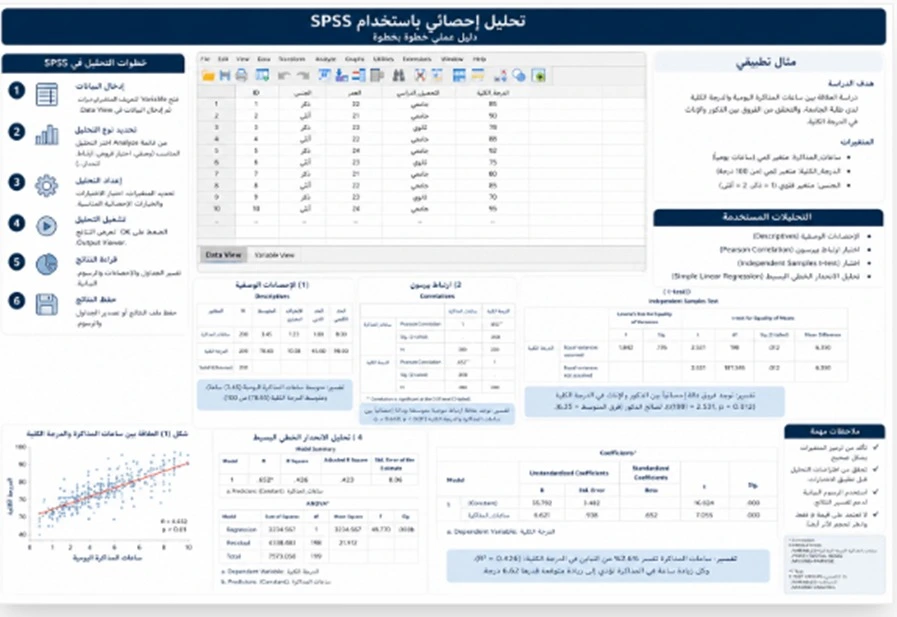
Formatting a master's defense presentation is not simply about choosing a color palette and font. Real formatting means building a visual hierarchy that immediately tells the committee what to read first, what the main message is, and which details are supporting evidence.
The title should be clearly visible at the top of the slide and larger than the body text. The content below it should remain limited. If a slide contains six long bullet points, the content likely needs to be divided or rewritten.
Font size should be large enough to read from the back of the room rather than only from the presenter’s laptop. There is no universal font size that suits every venue, so testing the slides on a larger display is more useful than relying on one rigid numerical rule.
Colors should be used for structure and emphasis rather than decoration. One main color and one supporting color are often enough. If the university has an official visual identity, it can be reflected without turning every slide into a branding advertisement.
Tables usually require redesign. A thesis table is designed for printed reading and may contain far more detail than a presentation slide can support. The defense version should highlight the rows or columns that matter and may show the principal finding next to the table rather than forcing the committee to search through it.
Charts also need direct titles. Instead of writing “Figure 4,” the title can communicate the actual message, such as “Higher post-test mean for the experimental group,” where that wording is accurate and supported by the data.
-
Each slide should have one clear visual center so the title table chart and several competing notes do not all demand the committee’s attention at the same moment
-
Tables taken from the thesis should be reformatted for presentation rather than inserted as screenshots because material designed for print is rarely readable from a distant screen
-
Colors and fonts should support the scientific sequence and should not become a demonstration of design skills at the expense of academic clarity
Academic Presentation Design for the Defense
Academic presentation design for the defense depends on selecting what supports the research argument rather than what simply fills the slides. The first question for any visual element should be: does this help the committee understand the idea faster? If not, it is probably unnecessary.
For the research problem, a simple conceptual model may help explain relationships among variables or factors. For methodology, a process diagram can show stages. For results, a chart can clarify differences or trends. However, not every slide needs an icon, image, or diagram.
A strong academic presentation also respects sources. If the researcher uses a statistic, quotation, or definition from a source outside the thesis itself, the reference should be indicated briefly and appropriately. There is no need to turn the bottom of every slide into a full bibliography. The complete references already appear in the thesis, and concise academic citation is generally sufficient for the presentation.
Conclusions should also remain within the boundaries of the study. If the sample is limited to one group, region, institution, or context, the slide should not imply that the finding automatically represents the whole Kingdom without sufficient evidence.
The presentation should clearly identify the contribution of the thesis. What did the study add? Did it examine a relationship in a new context, develop an instrument, provide an interpretation, compare groups, or add evidence to an existing debate? This is one of the most important questions in a defense and should not be left to the final seconds.
-
Every visual element should be included because it reduces the time needed to understand the idea rather than because it makes the slide look fuller
-
Conclusions should be phrased within the limits of the research design and sample so the presentation does not make claims stronger than the evidence in the thesis
-
The academic contribution should appear clearly in its own slide or within the conclusion so the committee can quickly identify what the research added beyond previous work
Presenting Master's Thesis Results
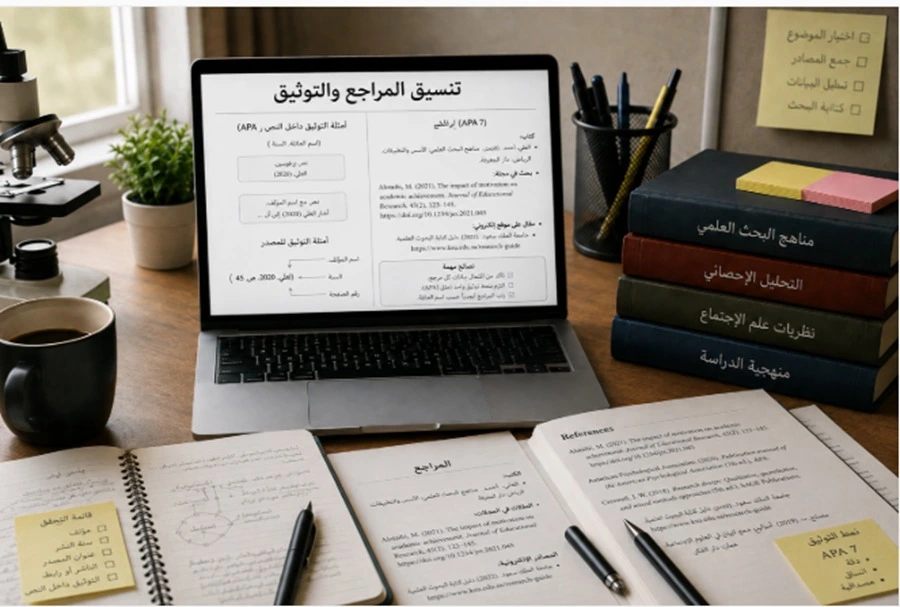
presenting master's thesis results deserves more attention than almost any other part of the defense because a large part of the discussion usually focuses on what the findings mean and how they were obtained. The strongest approach begins by linking each result directly to a research question or hypothesis.
If the study contains several research questions, the findings can follow the same order. Present the first question, then the central finding, then a short interpretation. This structure means the committee does not have to remember which table belongs to which research question.
In quantitative research, the researcher should not simply state that a result is “statistically significant” where additional indicators are important for understanding the direction or magnitude of the finding. At the same time, the researcher should not introduce statistical measures that were never part of the original analysis just to make the defense appear more sophisticated.
In qualitative research, the main themes can be presented with very short examples from the data where appropriate and where participant confidentiality is protected. The purpose is to demonstrate how the theme emerged from the data rather than fill the slide with lengthy quotations.
Unexpected findings should not be hidden. A result that differs from the researcher’s original expectation may become one of the most valuable parts of the discussion. Presenting it clearly and offering reasonable explanations demonstrates academic maturity.
All numerical results in the presentation should correspond exactly with the final thesis tables after all revisions. Committee members may have recorded figures while reading the thesis, and any mismatch can immediately become a question.
-
Each finding should begin with the research question it answers followed by the key figure or theme and a concise interpretation so the relationship between analysis and research remains visible
-
Unexpected findings should be presented transparently and interpreted rather than ignored because they can be among the most academically valuable parts of the thesis
-
Charts should be used where they communicate a pattern faster than a table while the original values remain available so visual simplification does not hide important details
PowerPoint for Researchers in Saudi Arabia
A PowerPoint for researchers in Saudi Arabia needs flexibility because graduate programs and disciplines vary widely. A presentation in education is not designed the same way as one in engineering, and a health sciences defense differs from a business administration defense. There is no single perfect template for every researcher.
A researcher in the humanities may need more space for defining concepts and developing an argument. A researcher in applied sciences may depend more heavily on diagrams, experiments, and visual evidence. A quantitative researcher may need tables and charts, while a qualitative researcher may need themes and carefully selected quotations.
In every case, the researcher should begin with the official instructions of the university and department. Saudi universities publish forms and procedures related to thesis readiness, committee formation, scheduling, and defense reports, and these may be updated over time. The presentation should therefore be checked against the current program requirements rather than copied from an old example.
For this reason, buying a ready-made template and forcing the study into it is usually weaker than building a simple visual system that adapts to the real content.
The researcher should also practice transitions between slides. The sentence connecting the research problem to the objectives or the methodology to the results is almost as important as the slide design because those transitions make the presentation feel like one connected research story rather than twenty unrelated cards.
-
The presentation template should reflect the discipline and type of data rather than being selected before the researcher knows what tables charts and content the study genuinely needs
-
University and department instructions should be checked before the final version is approved because forms procedures and presentation requirements may change or differ between programs
-
Rehearsal should include the spoken transitions between slides so the presentation remains coherent and does not feel like a series of abrupt topic changes
Designing Slides for the Defense Committee

designing slides for the defense committee focuses more on the committee’s needs than on the researcher’s personal taste. Committee members need to see the study title, problem, methodology, results, limitations, and contribution quickly. Every slide should therefore help them follow the argument or prepare for the next academic question.
One of the strongest techniques is preparing backup slides after the final thank-you slide. These slides are not shown during the main presentation but remain ready if the committee asks about the research instrument, validity or reliability evidence, sample details, additional tables, or analysis procedures.
This is better than forcing every technical detail into the main presentation. The researcher remains concise while still being prepared.
It is also useful to prepare one slide containing the full research questions for quick reference during discussion. Another can contain operational definitions where the study uses complex terminology. Additional slides can contain methodological limitations, detailed analysis procedures, or complete tables.
The goal is not to predict every possible question. The researcher does not need fifty prewritten answers. The objective is simply to make information that already exists in the thesis easy to access during the discussion.
Animation should generally remain limited in committee-facing slides. Every additional transition or animated element creates another potential technical problem and consumes attention. Simple sequencing is usually enough where it genuinely supports the explanation.
-
Backup slides should contain details that the committee may ask about such as instrument characteristics complete tables and analysis procedures without slowing the main presentation
-
Slide organization should allow the researcher to return to information quickly during discussion instead of scrolling randomly through dozens of slides
-
The presentation design should support the discussion after the formal presentation ends because an important part of the defense often begins after the final main slide
Professional Master's Presentation in Saudi Arabia
A professional master's presentation in Saudi Arabia means that content, design, and rehearsal work together. No visually impressive deck can compensate for a researcher who does not understand the study, and strong research knowledge does not justify an overcrowded presentation that hides the most important findings.
Professionalism begins with intelligent reduction. Repetition is removed, not important information. Tables are used where they support the scientific argument, not merely to prove that the researcher has a large amount of data.
Language should then be reviewed carefully. Spelling mistakes in an academic defense presentation create an unnecessarily poor impression, particularly in headings and key terminology. The names of committee members, the university, and the thesis title should be checked with special care.
Rehearsal comes next. The researcher should deliver the presentation using the real timing and identify which slides consistently take too long. If every rehearsal exceeds the allocated time, the solution is not to speak faster. The solution is to remove lower-priority detail.
Technical failure should also be anticipated. A backup copy, a stable document version, exported images of essential charts, and reliable fonts can reduce avoidable problems.
Finally, the researcher should remember that the committee evaluates the thesis and scientific defense, not the beauty of the PowerPoint alone. Saudi universities have formal procedures for evaluating the thesis, issuing committee reports, and completing any post-defense revisions according to their applicable regulations and implementing rules.
-
True professionalism appears in accurate content clear findings and control of presentation time more than in visual effects and animations
-
Final rehearsal should use the exact presentation version intended for the defense because late changes to slide order can disrupt the researcher’s speaking sequence
-
PowerPoint is a tool that helps the researcher defend the thesis but it cannot replace academic preparation for questions about methodology findings limitations and recommendations
Conclusion
The success of a professional PowerPoint presentation for a master's thesis defense in Saudi Arabia begins with understanding that the presentation is not a mechanical summary of the thesis. The researcher needs to identify the scientific line connecting the problem, questions, methodology, and findings and then convert that line into slides that help the committee follow the reasoning quickly.
Saudi universities treat thesis defenses as formal academic procedures involving committee formation, readiness forms, reports, decisions, and post-defense processes whose details can vary by university and implementing regulations. A researcher should therefore not depend on an internet template and assume that it represents one universal Saudi standard. The safer approach is to review the current department and university requirements with the supervisor before finalizing slide count, presentation time, and title-page structure.
The real quality work then begins: low-density slides, readable typography, charts that genuinely support the findings, carefully selected tables, a final version that matches the thesis, rehearsal using actual timing, and backup slides for likely questions.
The strongest presentation is not the one that tries to say everything. It is the one that allows the committee to see quickly that the researcher understands what was asked, why it was asked, how it was investigated, what was found, and what can reasonably be concluded from those findings.
Frequently Asked Questions
How many slides should a master's defense presentation contain?
There is no fixed number that suits every university or discipline because the number depends on the allocated time, research design, and density of the findings. The presentation time should therefore be confirmed first and the slide count built around it.
Do Saudi universities use one standard defense presentation duration?
A single duration should not be assumed for all universities and programs. The researcher should confirm the allocated time with the department and supervisor before designing the final deck.
What are the main sections of a master's defense presentation?
A typical defense includes the research problem, significance, questions or hypotheses, methodology, findings, discussion, conclusion, and recommendations, with the exact sequence adjusted to the nature of the study.
Should all research objectives appear in the PowerPoint?
Important objectives should be shown clearly. Where there are many closely related objectives, they can be organized concisely without changing their meaning.
Should the literature review be included?
Yes where it helps establish the gap, but the stronger approach is to summarize the main patterns and research gap instead of listing a long series of previous studies.
Should the complete theoretical framework be included?
No. Only the theoretical material needed to understand the study and its key concepts should normally appear in the defense presentation.
How should I present the research problem?
Begin with the context, identify the specific problem or gap, and connect it directly to the research question the study attempted to answer.
Should slides contain long paragraphs?
Long paragraphs should generally be avoided because the screen supports explanation while detailed discussion should be delivered verbally by the researcher.
Are tables better than charts?
It depends on the purpose. Tables are useful when exact values matter, while charts are often stronger where the objective is to show a comparison or pattern quickly.
Should I include every results table?
No. Select the results most directly related to the main research questions and keep additional tables in backup slides where useful.
Should non-significant findings be removed?
No if they answer part of the research questions. The absence of a significant difference or relationship can itself be an important finding that needs interpretation.
Should I mention the limitations of the study?
Yes. Recognizing limitations demonstrates that the researcher understands the scope of the findings and helps prevent unjustified generalization.
What is meant by an academic contribution slide?
It is a slide or section explaining what the thesis added to previous knowledge such as a new result context instrument comparison or interpretation.
Is there a required format for the first slide?
A university or college may have an official template or specific requirements, so department guidance should be checked before final design.
Should the university logo appear on every slide?
That depends on the official template if one exists. Where it is not required, university branding can be used in a restrained way that does not compete with the research content.
Is it better to present in Arabic or English?
That depends on the language of the program and thesis, department instructions, and the composition of the defense committee rather than the designer’s personal preference.
Can I use English terminology in an Arabic presentation?
Yes where necessary, particularly for common technical terms, instrument names, or measures, but the overall presentation should remain consistent rather than mixing languages randomly.
How can I present statistical analysis without making the slides too complex?
Show the statistic directly connected to the research question and explain its practical meaning instead of copying the full output from statistical software.
Should every statistical test value appear?
Include the values needed to understand the finding and those normally expected in the discipline, while additional technical detail can be placed in backup slides.
Should I use many images?
No. Images should be included only where they explain a concept, procedure, model, or relevant visual evidence rather than functioning as decoration.
What are the best colors for a thesis defense presentation?
A limited palette with strong readability and appropriate contrast usually works better than many colors. The university’s visual identity can also be reflected where suitable.
Are slide transitions and animations important?
Simple transitions can help with sequencing, but excessive effects rarely add academic value and may distract the committee.
What should I do with a very large table?
Extract the portion connected to the main finding, divide it, or convert the relevant pattern into an appropriate chart while keeping the complete table in backup slides.
Should references appear on every slide?
Brief citations can be included where an external statistic, definition, or idea is used. Complete references remain in the thesis and can also appear in a reference slide where appropriate.
Can I copy the thesis abstract onto the opening slides?
That is usually not the strongest approach. The abstract is written for reading, while a presentation introduction should be more visually concise and move quickly toward the research problem.
What is the biggest mistake in a master's defense presentation?
One of the most obvious mistakes is turning slides into pages of text and reading them aloud instead of using the PowerPoint to support the researcher’s explanation.
How should I prepare for committee questions?
Review methodological decisions, unexpected findings, study limitations, the reasons for choosing the sample and instruments, and prepare additional details for likely questions.
Should I prepare backup slides?
Yes. They are particularly useful for instrument details, validity and reliability evidence, additional analyses, and complete results tables.
Where should backup slides be placed?
They can be placed after the end of the main presentation so they do not consume the formal presentation time but remain easy to access during questions.
Should I rehearse using the actual presentation time?
Yes. Estimating time mentally is often inaccurate, and rehearsal reveals which slides need to be shortened.
What should I remove if my presentation is too long?
Start with secondary theoretical details and repetition rather than cutting the research problem, core methodology, or main findings so heavily that the study becomes difficult to understand.
Is it acceptable to read from the slides?
It is fine to refer to a figure, term, or short point, but reading every line reduces interaction with the committee and can make the researcher appear dependent on the screen.
How can I make the results section more convincing?
Connect each result to the research question, explain what it means, and then discuss its interpretation and limitations rather than presenting numbers without context.
Does an attractive PowerPoint improve the thesis grade?
Clear design helps the researcher present the work more effectively, but it does not replace the quality of the thesis, methodology, or ability to defend the research academically.
Are defense procedures the same across all Saudi universities?
No. Regulations, forms, and implementing procedures can differ between universities and programs, so researchers should consult the current official requirements of their own institution.
Do Saudi universities publish official thesis defense forms?
Yes. Several universities publish forms related to thesis readiness, committee formation, defense scheduling, and committee reporting, and those forms may be updated periodically.
Can the committee require thesis revisions after the defense?
Yes. Depending on the university’s rules and the committee’s decision, the thesis may be accepted subject to revisions, so the researcher should record committee comments carefully and follow the official post-defense procedure.
How do I choose a professional master's presentation design service?
Choose a service that begins by reading the thesis, asks about the presentation duration, research field, and university instructions, and builds the deck around the research problem, methodology, and findings rather than simply inserting text into a generic template.
What should I send the designer before work begins?
Send the final version of the thesis, any university or department guidelines, the allocated presentation time, committee member names, the approved university logo, and any supervisor comments related to the presentation content.
Need Help?
Contact us directly via WhatsApp and we will reply as soon as possible.
More Articles
Urgent PowerPoint Design in 24 Hours for University or Work
Urgent PowerPoint design within 24 hours for university or work, with clear structure, polished slides, accurate content, and presentation-ready delivery.
Read Article → Scientific ResearchTurning Scientific Research into a Concise Defense PowerPoint
Scientific research into a concise defense PowerPoint with clear structure, methodology, results, conclusions, and polished academic presentation slides.
Read Article → Statistical AnalysisPowerPoint Design Prices in Saudi Arabia by Slide Count
PowerPoint design prices in Saudi Arabia by slide count, with key cost factors, custom design options, and clear guidance to choose the right service.
Read Article →