
Cronbach's Alpha Reliability Testing and Result Interpretation
Cronbach’s alpha reliability testing with internal consistency analysis, item review, result interpretation, and clear limits for use in academic research.
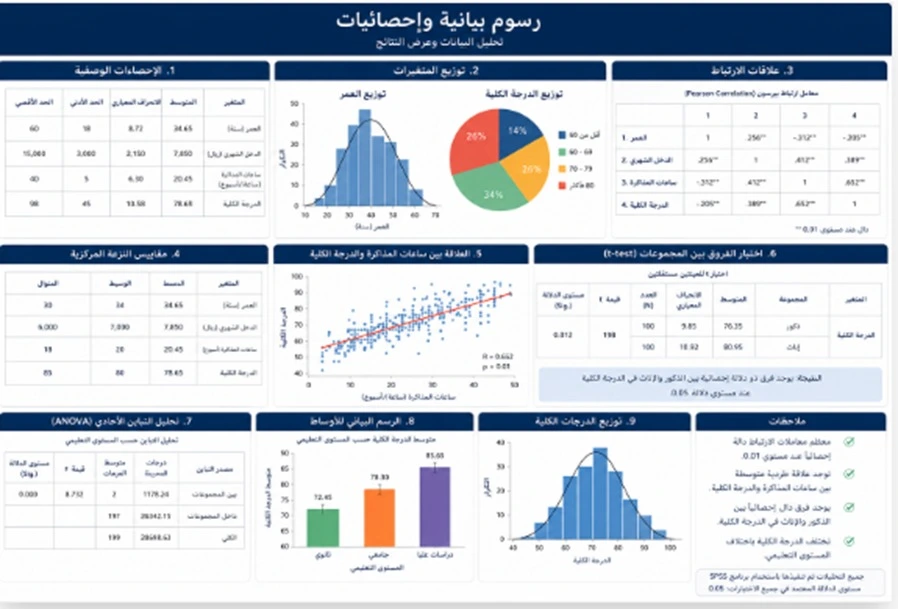
Cronbach's Alpha Reliability Testing and Result Interpretation
Cronbach's alpha reliability testing and result interpretation requires much more than generating one number and writing that the instrument is “reliable.” Alpha is influenced by the number of items, the relationships among them, the way responses are coded, the structure of the scale, and the sample used in the calculation. A high value also does not prove by itself that the instrument measures only one dimension or that it is valid for every intended use. For this reason, reliability analysis begins with reviewing the dimensions, reverse-coded items, scoring method, and data quality. The coefficient is then calculated for the appropriate scale or dimension, item relationships and deletion statistics are reviewed carefully, and the result is interpreted within the context of the study rather than by applying one fixed cutoff mechanically. The final objective is to help the researcher understand what the coefficient actually indicates and what it cannot establish.
Cronbach's Alpha Testing for a Questionnaire

The phrase Cronbach's alpha testing for a questionnaire is commonly used by students, but statistically, Cronbach’s alpha is more accurately described as a reliability coefficient or reliability estimate related to the internal consistency of a group of items rather than a hypothesis test such as a test of differences.
The basic idea is to examine the degree to which items that are intended to represent one construct behave in a related way.
If a researcher has a dimension consisting of several items designed to measure satisfaction, those items would normally be expected to show a reasonable degree of association if they all represent the same underlying aspect of satisfaction.
However, high relationships among items are not sufficient to prove that the scale is unidimensional.
A large group of items may contain several different underlying dimensions and still produce a high alpha because of the number of items and the pattern of correlations among them.
For this reason, the dimension should have a clear theoretical basis before the coefficient is calculated.
A researcher should not simply combine every question in the questionnaire, including demographic variables and several theoretically different dimensions, calculate one overall alpha, and then treat that number as evidence that the entire instrument is reliable.
If a questionnaire contains three dimensions measuring different constructs, it is often more meaningful to estimate reliability for the scores of those separate dimensions when that is consistent with the theoretical structure of the instrument.
Reverse-coded items should also be checked carefully before alpha is calculated.
One item entered in the wrong scoring direction can reduce its relationship with the remaining items and distort the resulting coefficient.
Methodological literature also emphasizes that alpha is affected by the number of items and that a high alpha does not automatically demonstrate unidimensionality. Its interpretation therefore requires consideration of the structure of the instrument rather than the coefficient alone.
-
Alpha should be calculated for a set of items that are theoretically intended to contribute to a common score or construct rather than combining unrelated questions simply to obtain one coefficient
-
Reverse-coded items and coding direction should be reviewed before calculation because one incorrectly scored item can distort the internal-consistency pattern
-
A high alpha value does not by itself prove unidimensionality and cannot replace examination of the theoretical and measurement structure of the instrument
Calculating a Reliability Coefficient
Calculating a reliability coefficient first requires an organized dataset because a mathematically correct formula cannot repair incorrect coding.
Before calculation, the researcher needs to identify exactly which items belong to the dimension.
If the “service quality” dimension contains eight items according to the instrument, the same eight items should be included in the calculation.
If an item from another dimension is accidentally included, the coefficient will describe a different item set from the scale the researcher intended to evaluate.
Missing responses and the way the statistical program handles them should then be reviewed.
Depending on the settings and software, some procedures may calculate the coefficient using only cases with complete data across all selected items, which can change the number of participants included.
The researcher should therefore know the actual number of cases used in the calculation.
In simplified terms, alpha is mathematically related to the number of items and to the covariance or relationship among those items relative to the variance of the total score.
This is why adding more related items can increase the coefficient even when the conceptual quality of the scale has not necessarily improved in the way the researcher might assume.
This is also an important reason not to compare a three-item scale with a thirty-item scale solely on the basis of their alpha coefficients.
For a multidimensional instrument, a separate coefficient may be calculated for each dimension when those dimension scores are meaningful and theoretically justified.
Calculating an overall alpha for the entire instrument requires a meaningful total score.
If the total score is not interpreted anywhere in the study, there may be little justification for estimating reliability for that overall score.
-
Calculation begins by identifying the correct items for every dimension and confirming the coding before running the statistical procedure
-
The number of cases used in the reliability estimate should be known, especially when missing data are present
-
Reliability of an overall questionnaire score should not be estimated automatically unless that total score has a clear theoretical and analytical meaning in the research
Interpreting Cronbach's Alpha
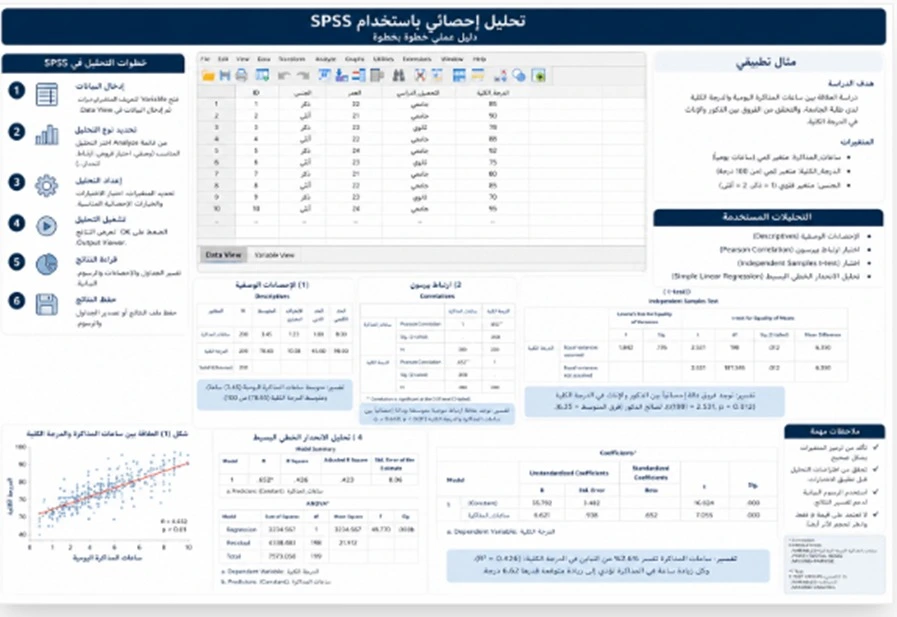
Interpreting Cronbach's alpha requires moving beyond ready-made statements such as “anything above 0.70 is excellent.”
Common thresholds such as 0.70 are sometimes used as general guidelines, but they are not universal laws that apply equally to every instrument, purpose, and research context.
The coefficient should be understood in relation to several factors.
How many items are included?
Is the scale newly developed or already well established?
Will the resulting score be used for low-stakes descriptive research or for a high-stakes decision?
Do the items genuinely represent one construct?
Are some items excessively repetitive?
What are the characteristics of the sample in which the coefficient was estimated?
A value such as 0.72 for a short scale may need to be interpreted differently from the same value obtained from a very long scale.
Likewise, an alpha of 0.95 does not automatically mean that the instrument is “better” than another scale with an alpha of 0.85.
An extremely high coefficient may justify checking whether some items are so similar that they repeatedly ask the same thing in slightly different words.
It is also important to remember that alpha is estimated from the data of a specific sample.
If a published study reports a high reliability coefficient for the same scale in another population, that does not automatically eliminate the need to evaluate the score performance in the current study when such evaluation is required.
Published methodological literature uses different standards depending on the research purpose and context and emphasizes that no single universal cutoff can be applied without considering the instrument and intended use.
-
Alpha should be interpreted together with the number of items scale structure sample and intended use rather than as an isolated number
-
The value 0.70 may appear as a general guideline in some references but should not be treated as a universal guarantee that every instrument is acceptable
-
Extremely high alpha values may sometimes justify examining item redundancy rather than simply celebrating the larger coefficient
Measuring the Reliability of a Research Instrument
Measuring the reliability of a research instrument is a broader concept than obtaining Cronbach’s alpha.
Reliability concerns the consistency of scores under specified conditions, and different methods can be used to estimate it depending on the type of instrument and the purpose of measurement.
Cronbach’s alpha is appropriate in certain situations involving scores created from multiple items, but it is not the only reliability method available.
For example, a researcher may be interested in the stability of scores over time.
In that situation, test-retest reliability may be relevant to the research question.
In other studies, two or more raters may evaluate the same performance, making inter-rater agreement or reliability important.
For multi-item scales, the focus may instead be on internal consistency.
Therefore, the phrase “instrument reliability” should not automatically be reduced to one alpha coefficient.
Reliability also does not establish validity.
An instrument can produce highly consistent scores while still measuring something different from the construct it was intended to assess.
Instrument quality therefore requires multiple forms of evidence depending on the research design.
The reliability coefficient is also more accurately understood as a property of scores obtained under particular conditions and from a particular sample rather than as a permanent characteristic that belongs to the instrument forever.
It is therefore often better to report the result specifically, such as: “The alpha coefficient for the dimension scores in the current sample was...” rather than using absolute wording that suggests the instrument will always have the same reliability in every population and setting.
-
Instrument reliability is broader than Cronbach’s alpha and different forms of reliability evidence may be needed depending on the measurement question
-
Reliability and validity are related but distinct concepts and high reliability alone does not prove that an instrument measures the intended construct
-
Reliability estimates should preferably be linked to the score and current sample rather than treated as permanent properties of an instrument
Internal Consistency Testing for a Questionnaire
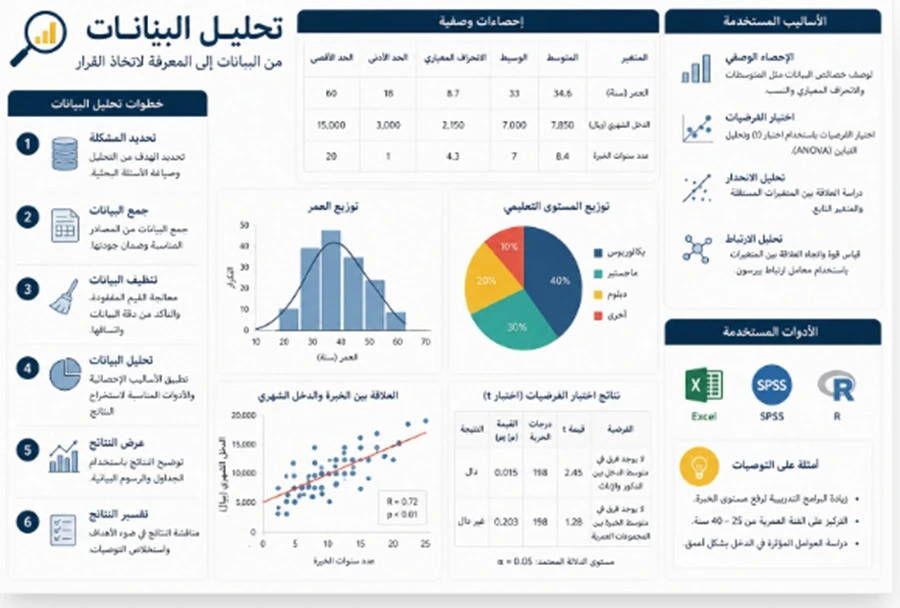
Internal consistency testing for a questionnaire focuses on how strongly the items intended to contribute to one score are related to one another.
However, there is an important difference between saying that “the items are related” and saying that “the items measure one dimension.”
Cronbach’s alpha does not independently establish unidimensionality.
If an instrument contains two large item groups measuring different but related factors, alpha may still be relatively high.
For this reason, the coefficient should not be used as a substitute for evaluating scale structure when unidimensionality is an important methodological issue.
Depending on the stage of instrument development and the research design, exploratory factor analysis, confirmatory factor analysis, or other structural analyses may be appropriate.
Once the structure has been considered, alpha can contribute one part of the overall reliability picture.
The relationship of each item with the relevant total or dimension score may also be examined.
If one item behaves very differently from the rest, the first question should be why.
Was it reverse-worded and incorrectly coded?
Is the wording ambiguous?
Does it belong to a different construct?
Is there a data problem?
The item should not be deleted immediately simply because software shows that alpha would increase if the item were removed.
Item deletion should combine statistical evidence with theoretical meaning.
Methodological work has repeatedly warned against treating alpha as evidence of unidimensionality and notes that assumptions related to dimensionality and item equivalence affect the interpretation of alpha as a reliability coefficient.
-
Internal consistency is not the same as unidimensionality so alpha should not replace examination of the scale structure
-
An item with weak relationships to the remaining items should be diagnosed before it is removed
-
Statistical decisions about item removal should remain consistent with the theoretical definition of the dimension and the content the item is intended to represent
Research Scale Reliability Analysis
Research scale reliability analysis begins with understanding how the scale was designed before looking at the software output.
Is the scale unidimensional?
Does it contain several subdimensions?
Does the researcher use a total score, dimension scores, or both?
These questions determine which reliability coefficients are meaningful.
If a scale contains four clearly defined dimensions, evaluating each dimension separately may be more informative than depending on one large overall coefficient calculated from every item.
The number of items within each dimension should then be considered.
Very short subscales may show lower alpha values partly because the coefficient is influenced by the number of items, so they should not be interpreted mechanically in exactly the same way as long scales.
Item correlation patterns may also be reviewed where useful.
If some items are nearly identical, they may increase internal consistency while contributing little additional information.
If some item relationships are unexpectedly negative, coding and wording should be checked.
The researcher can also examine statistics such as “Cronbach’s Alpha if Item Deleted.”
However, this column should not be interpreted as an automatic command to delete an item.
If deleting one item raises alpha from 0.81 to 0.82, that small change is not by itself sufficient justification for removing a theoretically important item.
On the other hand, if one item creates a substantial statistical problem and is also theoretically inconsistent with the dimension, the case for reviewing that item becomes stronger.
For scales that do not satisfy the assumptions underlying alpha particularly well, other reliability estimates such as McDonald’s omega may also be considered depending on the measurement model and research design.
Recent methodological research increasingly discusses omega as an important alternative, particularly when items differ in the strength of their relationship with the underlying construct.
-
Every dimension should be evaluated according to its own structure and number of items rather than comparing all coefficients with one automatic cutoff
-
The “alpha if item deleted” statistic is a diagnostic tool and should not make the deletion decision for the researcher
-
Alternative reliability coefficients may be considered when the assumptions underlying alpha do not fit the scale structure adequately
Checking Questionnaire Reliability

Checking questionnaire reliability involves more than seeing an alpha value in one output table.
The first step is confirming that the sample used in the calculation is the intended analytical sample.
Missing data and any excluded cases should then be reviewed.
The dimension itself should also be examined.
Do all items operate in the same scoring direction after any required reverse coding?
Are there negative or otherwise unexpected values?
Are all selected items genuinely part of the score?
Only after these checks should the final alpha value be interpreted alongside the supporting item statistics.
It is also useful to avoid using the word “reliable” as an absolute label.
Instead, the researcher should identify which aspect of reliability was evaluated.
If only Cronbach’s alpha was calculated, the analysis provides evidence related to internal consistency for a particular score under the conditions of the study.
That number alone cannot establish stability across time.
It cannot establish agreement between raters.
It cannot establish validity.
And it cannot independently establish unidimensionality.
For this reason, the wording used in the methodology and results chapters should remain precise.
Rather than saying, “All psychometric properties of the instrument were confirmed,” the researcher can describe what was actually done: “Internal consistency of the dimension scores was estimated using Cronbach’s alpha...” followed by the coefficient and sample information.
This makes the report stronger because it does not claim more than the analysis actually examined.
-
Reliability checking begins with the sample data and selected items before the final coefficient is interpreted
-
Alpha addresses a specific aspect of reliability and does not automatically test temporal stability validity or inter-rater agreement
-
Academic reporting should specify exactly what type of reliability evidence was obtained rather than using broad and unsupported claims
Calculating the Reliability of Questionnaire Dimensions
Calculating the reliability of questionnaire dimensions requires treating each dimension as a theoretical unit before treating it as a group of columns in a statistical program.
If the first dimension contains seven satisfaction items and the second contains six ease-of-use items, they should not automatically be combined unless the instrument design justifies a meaningful total score.
The coefficient for each dimension should be calculated using the items belonging to that dimension in the final approved version of the instrument.
The resulting value can then be reported together with the number of items and, where useful, the number of cases used in the calculation.
Reporting the number of items next to alpha is helpful because the coefficient is influenced by scale length.
A simple illustrative example could look like this:
The values in this table are only illustrative examples and are not universal thresholds for judging any real study.
It is also incorrect to compare two dimensions and claim that the dimension with an alpha of 0.90 is “more valid” than another dimension with an alpha of 0.80.
Alpha is not a validity coefficient.
The dimensions may also differ in item count, variability, and construct characteristics.
A stronger analysis explains each coefficient in context rather than turning the dimensions into an unjustified numerical ranking.
-
Reliability for each dimension should be calculated from the items that genuinely belong to it according to the theoretical model
-
The number of items should be reported with alpha because it helps provide a more realistic interpretation of the coefficient
-
A higher alpha in one dimension does not mean that the dimension is more valid or more important than another one
Evaluating the Reliability of a Research Instrument
Evaluating the reliability of a research instrument requires gathering reliability evidence that is appropriate for how the score will be used.
If the study uses a published scale that has been tested previously, the researcher should review its reported measurement properties, but this does not necessarily remove the need to evaluate how the scores perform in the current sample when the study requires it.
If the researcher has developed a new instrument, the evaluation becomes broader.
In that case, the researcher needs to consider the content of the items, the structure of the scale, how the items function in the sample, and reliability evidence.
The size and characteristics of the sample used to estimate reliability should also be considered.
The resulting coefficient is an estimate rather than a fixed truth without uncertainty.
In more advanced methodological reporting, confidence intervals for reliability estimates may be provided where the software, method, and reporting framework support them.
Most importantly, the instrument should not be modified randomly after every output.
If alpha is lower than expected, diagnosis should begin:
Was the coding correct?
Is there a reverse-coded item?
Is the dimension actually multidimensional?
Is the number of items small?
Is one item theoretically inconsistent?
Does the sample have very limited variability?
Only after understanding the likely cause should a decision be made.
The objective is not to reach 0.70 or 0.80 at any cost.
The objective is to obtain the most honest and useful estimate possible of the consistency of the score being used in the study.
-
Reliability evaluation should explain why the coefficient has the observed value rather than only labeling it acceptable or unacceptable
-
A newly developed instrument requires broader evidence of measurement quality than Cronbach’s alpha alone
-
A lower coefficient should lead to methodological diagnosis rather than random item deletion intended only to reach a preferred number
Interpreting the Reliability Coefficient Result
Interpreting the reliability coefficient result in a thesis can be approached through three layers: reporting the coefficient, interpreting it in context, and explaining its limitations.
The first layer is straightforward.
The researcher reports the dimension, number of items, and coefficient.
The second layer considers whether the value provides an appropriate level of internal consistency for the intended use according to the study context and the methodological references being followed.
The third layer is especially important.
The researcher should explain that the coefficient relates to scores obtained from the current sample and should not be treated as independent evidence of validity or unidimensionality.
An appropriate reporting style could be:
“Internal consistency of the (...) dimension was estimated using Cronbach’s alpha. The coefficient was (...) in the current sample, providing evidence regarding the consistency of the items in this application. The value was interpreted in light of the number of items and the structure of the dimension and was not treated as independent evidence of instrument validity or unidimensionality.”
This wording is more accurate than the traditional statement:
“Because alpha is greater than 0.70, the questionnaire is excellent, valid, and reliable.”
The second statement combines several claims that the coefficient cannot establish.
If the value is low, it should not be hidden.
It should be reported, possible explanations should be discussed, and any action taken should have a methodological basis.
Strong research is not research in which every coefficient is high. It is research that reports what actually happened and explains the decisions in a transparent and reviewable way.
-
Interpretation should include the coefficient context and limitations rather than only one acceptance or rejection statement
-
A reliability coefficient should not be transformed into evidence of validity or unidimensionality
-
A low coefficient should be discussed and diagnosed rather than manipulated through analysis or item deletion simply to hide the result
What Does Cronbach's Alpha Mean in Simple Terms?
In simple terms, alpha attempts to answer a question such as:
Are the items whose sum or average is being treated as one score related enough for that grouping to be reasonable under the assumptions being used?
If the items move in completely unrelated directions, that may indicate a problem requiring further examination.
However, if they are very highly related, the researcher should still not immediately conclude that everything is perfect.
Some items may be repetitive.
The scale may contain more than one dimension.
The alpha value may also have increased partly because the scale contains a large number of items.
For this reason, Cronbach’s alpha is a diagnostic and estimation tool within the broader measurement process, not a final quality stamp.
Is 0.70 Always the Correct Cutoff?
No single universal number is appropriate for every context.
The value 0.70 has become a common guideline in many applications, but professional and methodological standards do not simply impose one cutoff for every kind of scale and decision.
The level of reliability required may also be higher when the decisions based on the score are more important or consequential.
A cautious illustrative table might be:
This table is not a universal university acceptance rule and should not replace the methodological reference adopted by the researcher.
If a university, journal, or academic discipline specifies a particular standard, that requirement should be followed and properly cited.
Why Might Cronbach's Alpha Be Low?
A lower coefficient can result from many causes:
-
A small number of items
-
A reverse-coded item that was not recoded correctly
-
An item from another dimension being included accidentally
-
Unclear item wording
-
Weak relationships among items
-
More than one dimension within the same item set
-
Data-entry or coding errors
-
Very limited variability in participant responses
-
Items that do not represent the construct consistently
-
Large differences in the way individual items function
For this reason, the first response to a low alpha should not be deleting the item with the lowest item-total relationship.
The researcher should first investigate the reason.
An item may be theoretically essential for covering an important aspect of the construct, and removing it may raise alpha while weakening content representation.
Is a Very High Alpha Always Better?
No.
Alpha generally increases as items become more strongly related, but the number of items also affects the coefficient.
A scale containing many questions that repeatedly ask almost the same thing in slightly different wording may produce a very high alpha without adding enough diversity of information.
For this reason, a high coefficient should lead to additional questions:
Are all items necessary?
Is there conceptual or linguistic repetition?
Does the score represent one dimension?
Are there internal dimensions that should be analyzed separately?
The goal is not to produce an alpha as close to 1 as possible.
The goal is to have a clear instrument that adequately represents the construct without unnecessary redundancy.
Methodological literature shows that alpha can increase with the number of items and that a high value alone is not enough to establish the structure or quality of the scale.
Should an Item Be Deleted If Alpha Increases After Deletion?
Not automatically.
The Cronbach’s Alpha if Item Deleted statistic helps the researcher understand how the coefficient would change if a particular item were removed, but it is only diagnostic information.
Before deleting an item, the researcher should examine:
-
Was the item reverse-coded and scored correctly?
-
Does the item belong to the dimension theoretically?
-
Is its wording clear?
-
How much does alpha actually increase after deletion?
-
Would deleting the item weaken construct coverage?
-
Is deletion consistent with the way the original instrument was developed?
-
Is the scale published or standardized in a way that limits arbitrary changes?
If alpha increases from 0.84 to 0.845 after deleting one item, that difference alone does not automatically justify removing an important item.
If there is a substantial statistical issue and the same item also has a theoretical or wording problem, the case for reviewing or removing it becomes much stronger.
Cronbach's Alpha Versus McDonald's Omega
McDonald’s omega has received increasing attention in modern methodological literature because it is based on a factor-model framework and can perform more appropriately in situations where items differ in how strongly they relate to the underlying construct.
Cronbach’s alpha depends on assumptions that may not always hold, including particular forms of equivalence among items.
For this reason, some modern studies recommend reporting omega alongside alpha or using it as part of a broader reliability evaluation depending on the scale and measurement model.
This does not mean that alpha is automatically “wrong” in every application.
The appropriate decision depends on the measurement model, the data, and the purpose of the analysis.
Modern methodological research discusses omega as an important alternative or complementary estimate when alpha’s assumptions do not fit the instrument particularly well.
Example of Reporting Cronbach's Alpha in Research
Instead of writing:
“Alpha was 0.83, therefore the questionnaire is valid, reliable, and excellent.”
A more accurate statement would be:
“Internal consistency of the dimension items was estimated using Cronbach’s alpha, which produced a coefficient of 0.83 in the current sample. The result indicates an appropriate level of consistency among the items in light of the scale structure, number of items, and research context, without treating alpha as independent evidence of validity or unidimensionality.”
If the instrument contains several dimensions, a table can be presented:
The actual values should then be interpreted after they have been calculated rather than inserting hypothetical numbers into the thesis.
Common Errors When Using Cronbach's Alpha
Common mistakes in theses and research projects include:
-
Calculating alpha for every questionnaire item even when they represent different dimensions
-
Including demographic variables in the reliability coefficient
-
Forgetting to reverse-code required items
-
Treating 0.70 as a fixed universal law
-
Claiming that alpha proves instrument validity
-
Claiming that alpha proves unidimensionality
-
Automatically deleting items whenever alpha increases after deletion
-
Attempting to obtain the highest possible coefficient even if this increases item redundancy
-
Using a coefficient reported in a previous study instead of evaluating the current sample when current estimation is required
-
Comparing a very short dimension with a long one using the coefficient alone
-
Failing to report the number of items
-
Ignoring missing data
-
Using an incorrectly coded version of the dataset
-
Reporting the coefficient without interpretation
-
Interpreting the coefficient without considering the theoretical model of the instrument
Avoiding these mistakes makes a reliability report much stronger than simply presenting a large number in a table.
Why Choose Rukn for Research Instrument Reliability Analysis?
Rukn Translation and Educational Services provides academic data-analysis and statistical services that can include running analyses, interpreting findings, preparing tables, and working with spreadsheets and research datasets.
The reliability-analysis scope can therefore be defined according to the current condition of the research.
A researcher may already have a clean dataset and only need the alpha coefficient calculated for each dimension.
Another dataset may contain reverse-coded items that need to be checked before calculation.
In another case, the alpha value may already exist, but the researcher may not know how to interpret it appropriately in the thesis.
The researcher may also need item-level statistics reviewed or several dimensions compared carefully.
The value of the service does not lie in simply running one command in statistical software.
The important part is confirming that the correct items were used, that the score was constructed appropriately, and that the interpretation does not go beyond what the coefficient can support.
Items should not be deleted and data should not be altered simply to obtain a higher coefficient.
It is also not appropriate to guarantee that alpha will exceed a particular threshold before the data are analyzed because the value depends on the actual responses and structure of the instrument.
Steps for Calculating and Reviewing Cronbach's Alpha
The process can be organized as follows:
-
Receive the questionnaire and dataset together with the final definition of the dimensions.
-
Identify the items belonging to each dimension according to the instrument design.
-
Review response coding and the direction of the response scale.
-
Identify reverse-coded items and recode them correctly.
-
Check missing values and the cases included in the calculation.
-
Review the logic of total scores and dimension scores.
-
Calculate Cronbach’s alpha for every score that has a meaningful research interpretation.
-
Review item relationships and diagnostic statistics where necessary.
-
Examine alpha if an item is deleted without making an automatic deletion decision.
-
Review any inconsistent item from both statistical and theoretical perspectives.
-
Consider alternatives such as omega when the scale structure makes them appropriate.
-
Organize the final reliability table with item counts and actual coefficients.
-
Write an accurate interpretation of the coefficient within the study context.
-
Explain the limits of the result and avoid presenting alpha as evidence of validity or unidimensionality.
-
Match the final values with the methodology and results chapters before submission.
Using this process turns the reliability coefficient into a meaningful part of instrument evaluation rather than a number copied directly from the statistical software output.
Cronbach's Alpha and Reliability Analysis Prices
There is no single fixed price for reliability coefficient calculation and analysis because the scope varies according to the instrument and dataset.
Factors that can influence the scope include:
-
Number of participants
-
Number of items
-
Number of dimensions
-
Presence of reverse-coded items
-
Condition of the dataset coding
-
Amount of missing data
-
Whether the instrument is ready or requires review
-
Whether alpha alone or a broader reliability analysis is required
-
Need for item-level review
-
Need to calculate more than one reliability coefficient
-
Presence of Arabic and English versions
-
Supervisor revisions
-
Need to interpret the result within the thesis
-
Need to prepare final tables
-
Required delivery deadline
A clean dataset containing one dimension is different from a multidimensional instrument that requires coding review, several separate coefficients, and interpretation for every dimension.
Likewise, generating the coefficient alone has a narrower scope than reviewing the instrument, data, item behavior, and written interpretation together.
For this reason, it is better to provide the questionnaire, dataset, dimension definitions, scoring method, and any supervisor comments so the required scope can be identified before pricing.
Frequently Asked Questions
Does a Cronbach's alpha above 0.70 mean the instrument is excellent?
Not necessarily. The value 0.70 is a common guideline in some applications, but interpretation depends on the number of items, scale structure, sample, and intended use of the score. The coefficient should not be judged from the number alone.
Does Cronbach's alpha measure questionnaire validity?
No. Alpha provides evidence related to one aspect of reliability or internal consistency under particular conditions. It does not demonstrate that the instrument measures the correct construct. Validity requires other forms of appropriate evidence.
Should I delete any item if alpha increases when it is removed?
No. The item’s coding, wording, theoretical importance, and the actual size of the increase should be reviewed first. The decision should not depend on one software statistic.
Should alpha be calculated for the whole questionnaire or each dimension?
That depends on the structure of the instrument. If the dimensions measure different constructs, dimension-specific coefficients are often more meaningful. An overall coefficient requires a theoretically justified total score.
What should I send when requesting reliability calculation and interpretation?
Send the final instrument, dataset, definitions of the dimensions, known reverse-coded items, scoring method, and any instructions or comments from the supervisor or university.
Conclusion
Successful Cronbach's alpha reliability testing and result interpretation is not measured by obtaining the highest possible coefficient.
Correct analysis begins by identifying the score whose reliability needs to be evaluated.
The items contributing to that score are then identified.
Coding, reverse-scored items, and missing data are reviewed.
The coefficient is calculated using the correct item set.
Item-level and diagnostic information is then examined without random deletion.
Finally, the coefficient is interpreted in light of the number of items, scale structure, sample, and intended use of the score.
Cronbach’s alpha can provide important information about the performance of a set of items, but it does not independently prove validity or unidimensionality, and it should not become a final judgment on the instrument simply because it exceeds one particular number.
A stronger researcher is one who can explain why the coefficient was used, which items were included, what the result means, and what its limitations are rather than simply writing that “reliability was high.”
If you already have a questionnaire or scale that has been administered and you need Cronbach’s alpha calculated or the reliability result reviewed and interpreted within your research, prepare the dataset, final instrument, dimension definitions, and any supervisor comments, then contact Rukn Translation and Educational Services to determine whether you need coefficient calculation only, review of coding and items, dimension-level reliability analysis, or a complete interpretation and reliability table for inclusion in the thesis.
Need Help?
Contact us directly via WhatsApp and we will reply as soon as possible.
More Articles
Research Hypothesis Testing and Choosing the Right Statistical Test
Research hypothesis testing and statistical test selection based on variable type and study design, with accurate interpretation of significance, effect size, and results.
Read Article → Statistical AnalysisSurvey Data Coding and Preparation for Statistical Analysis
Survey data coding and preparation for statistical analysis, including variable definitions, missing data, reverse-coded items, data cleaning, and organized research datasets.
Read Article → Research Project AnalysisStatistical Survey Analysis and Results Interpretation for Researchers
Statistical survey analysis with data cleaning, test selection, table preparation, and clear interpretation of results linked directly to research questions and hypotheses.
Read Article →